
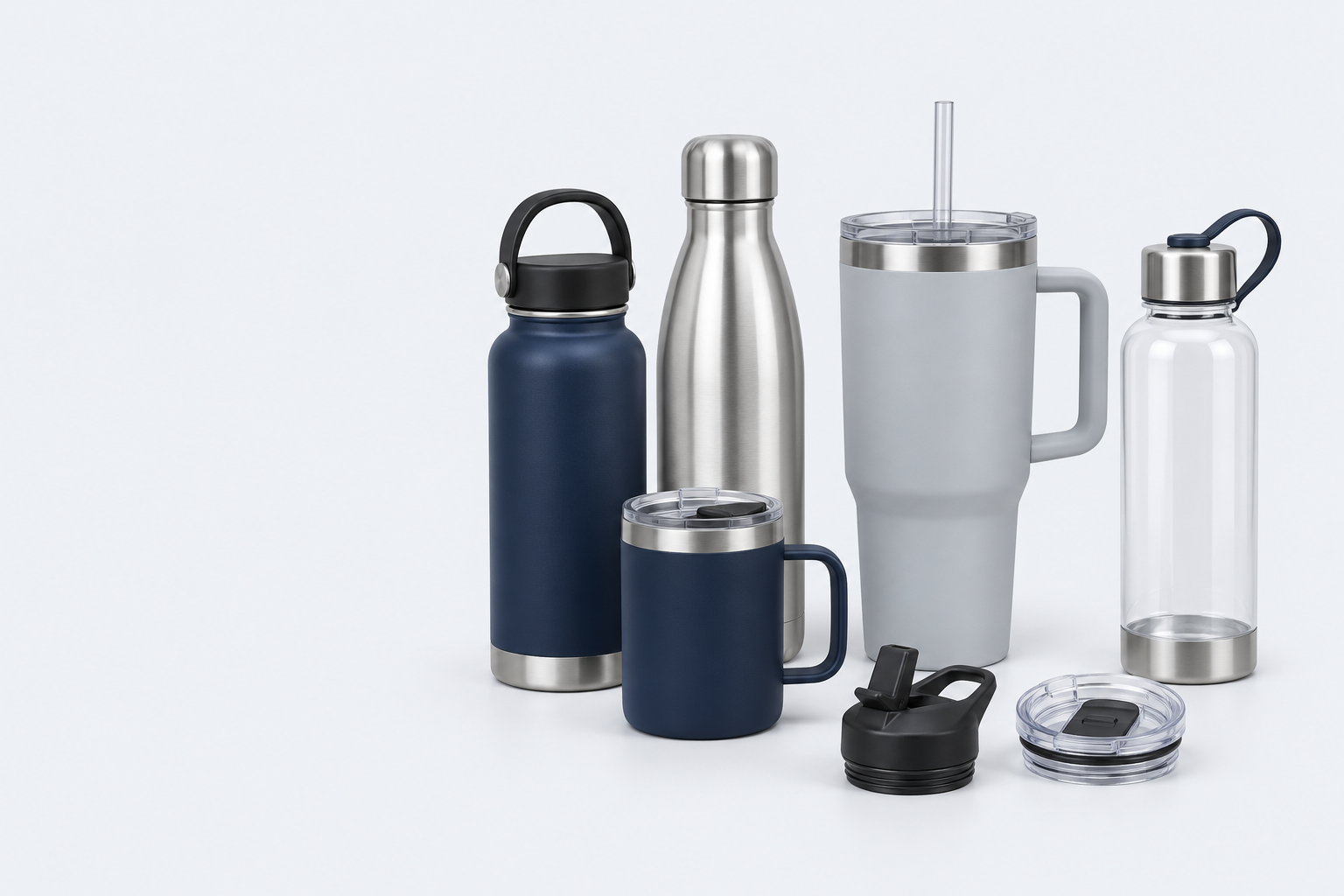
LONG-TERM PROCUREMENT
Repeat Orders & Change Control
Use a controlled specification, variant list and change review to make replenishment requirements clear.
A reorder should identify the configuration being repeated, rather than refer only to an old product photo. Keep the approved product, sample, artwork, packing and inspection references together, and confirm what must stay the same.
Create the Reorder Reference
Use an item code and revision for each product configuration. Link the body, lid, seals, accessories, color, artwork and unit pack to that reference.
Retain approved sample identifiers and the relevant inspection criteria. Record any accepted exceptions so they are not silently treated as requirements for every later order.
Plan Quantities and Timing
Share the expected quantities by variant and the required arrival window. If purchasing is seasonal, explain the likely planning periods while distinguishing a forecast from a confirmed order.
Ask for the current quantity, material, capacity and scheduling assumptions when placing the reorder. Prior availability or timing should be reconfirmed rather than treated as a standing supply guarantee.
Review Changes Before Release
Identify proposed changes to materials, components, tooling, decoration, packing, production location or required documents. Record the reason and affected item revisions.
Agree whether the change requires a new sample, inspection review, document review or revised price and schedule. Keep the approval record with the order before the changed configuration is released.
Specify Accessories and Spare Components
Where spare lids, seals or accessories are required, identify the compatible product revision and quantity. Confirm separate packing, labeling and availability for those items.
Do not assume that parts with a similar appearance are interchangeable across revisions. Review the relevant fit and functional requirements for the proposed combination.
Carry Lessons Into the Next Order
Review any previous quality findings, packing changes and receiving feedback before the next production plan is agreed. Confirm the corrective actions and the checks intended to verify them.
Keep a version history so purchasing, product and receiving teams can identify which configuration is current. Long-term supply, spare-part availability and price arrangements remain subject to the agreed programme.
Your Brief Checklist
- Item codes and approved revisions
- Sample, artwork and packing references
- Variant quantities and arrival windows
- Material, component and process change review
- Spare-component compatibility and packing
- Prior issue closure and current order confirmation
Reorder the accepted configuration, not just the old photograph
A repeat order should start from an identifiable item and approved revision. Keep the body, lid, accessories, material, finish, artwork, pack and relevant records connected. A familiar silhouette does not establish that the same assembly or commercial basis will be supplied again.
| Reorder decision | Record to compare | When another review is needed |
|---|---|---|
| Same body and closure | Item and component codes, drawings and retained sample. | A changed interface, seal, supplier part or assembly. |
| Same appearance | Finish and color references plus approved artwork position. | A new coating, resin, effect, artwork or printing method. |
| Same selling unit | Complete accessory and pack-out list with label files. | Changed included contents, box, language or receiving label. |
| Same functional feature | Module or mechanism reference and acceptance notes. | A changed holder, filter, press, speaker or power arrangement. |
| Same commercial programme | Variant quantities, current quote and delivery scope. | Different quantity split, destination, timing or separately priced work. |
Plan replacement parts by interface and revision
For lids, straws, seals, handles or functional modules, use exact component references and confirm fit with the selected product. State any separate availability and commercial arrangement. Do not imply indefinite support or universal compatibility.
If a component becomes unavailable, compare proposed alternatives before approving a substitution. Ask which fit, care, document, packaging or instruction records change.
Keep a reason for each change
A new color may be a seasonal choice; a lid change may respond to a problem; a pack change may come from a warehouse. Record the reason, affected items, approval and the effective order.
Do not allow an updated artwork file to replace an old one without an item link. Several capacities or markets may still need different approved versions at the same time.
Example: a replacement lid looks the same
A repeat order proposes a similar lid from a changed component source. The buyer requests the exact reference and checks neck fit, seals, operation, instructions and pack before accepting it. The old appearance reference remains useful for color, but it does not by itself approve the new interface.
Specific questions about this decision
Can we use last year’s approved sample?
It is a useful starting reference. Confirm the actual item and component revisions and identify changes before relying on it for the next order.
Does a repeat order need a new barcode?
Use the buyer’s actual item and receiving rules and the changed selling-unit identity. Do not guess from the product’s appearance.
Can packaging change without affecting the product?
The product body may remain the same while protection, included information, identification or packed contents change. Review the affected scope.
Continue with the next decision
Model references for this enquiry
Keep the model reference with the accepted sample, artwork and packing revisions.
- LT Vacuum Water Bottles (350 ml, 550 ml, 750 ml).
- BB Handled Straw Tumblers (30 oz, 40 oz).
- MK Insulated Handle Mugs (14 oz, 16 oz, 25 oz, 32 oz).
Ready to Discuss Your Drinkware Project?
Bring your product references, estimated quantities and requirements into one brief.