
PACKAGING REFERENCE
Packaging Checklist
Bring presentation, protection and order identification into one packing brief.
Packaging has several jobs. It presents the product to the buyer, protects it in transit and helps receiving teams identify the order. Define each layer separately.
Individual Pack
Record the product configuration, accessories, inserts and package style. Size the packaging around the approved product rather than an early drawing alone.
Review the final artwork, product name, quantity and any buyer-supplied information. Confirm who approves each file.
Protection & Presentation
Identify surfaces that need protection and the expected unpacking experience. Review how the product is held in the pack and whether components can move against each other.
Any transport test or special protection requirement should be included in the brief and agreed for the packing configuration.
Carton Configuration
Confirm units per inner pack and master carton, carton markings and any restrictions from the receiving warehouse. Keep different variants identifiable.
Check final dimensions and weights once the packing configuration is set. These details are also needed for transport planning.
Labels & Order Records
Provide barcode files, item codes, purchase order references and label positions. Make sure data matches the buyer’s receiving system.
Keep the approved labels, packing specification and product variant list synchronized. A late artwork change should be checked against all affected packs.
Shipment Handover
Confirm the destination, consignee instructions, shipment documents and agreed terms. Review the final packing list before handover.
Resolve any mismatch between ordered quantities, carton counts and variant labels before the shipment is released.
Your Brief Checklist
- Approved unit pack and insert list
- Protection requirements
- Final artwork and barcode data
- Units per carton and markings
- Carton dimensions and weights
- Packing list and receiving instructions
Specify the selling unit and the shipping unit
Packaging has to protect, present and identify the actual item. A gift box, a retail unit and a shipping carton do different work. Define the complete contents and the way the next person will receive them before asking for a packaging price.
| Packaging layer | Information to specify | Sample check |
|---|---|---|
| Complete unit | Body, lids, straws, filters, handles, module, cable or other accessories actually supplied. | Check every component against an itemized pack-out list. |
| Protection | Contact points, movement, exposed finish and vulnerable parts. | Review protection around rim, handle, decorative surfaces and modules. |
| Retail or gift presentation | Artwork, inserts, product information, box construction and visible arrangement. | Approve the final assembled selling unit. |
| Identifiers | Item code, language/artwork version and buyer-provided barcode or receiving label. | Match data and placement against the approved files. |
| Master carton | Units per carton, SKU mix, dimensions, weights and marks. | Check the agreed carton arrangement and identification. |
| Destination handoff | Warehouse, store, event, assembly partner or print shop requirements. | Confirm the receiving party can identify and handle the shipment. |
A styled gift photograph is not a packing instruction
A reference scene can include tea, a notebook, a bottle of wine or a cable that the drinkware supplier is not supplying. The pack-out list should distinguish supplied components, separately sourced items and photography props.
For a paired or multi-item set, review the complete arrangement. Protecting one cup in a generic box does not establish the protection of the final kit or the way it will be presented on opening.
Labels must follow the actual SKU revision
A change to capacity, lid, color or accessory can affect the identifier and the customer-facing information. Keep artwork, unit code and carton code tied to the accepted version. Do not reuse a barcode or label file solely because the body looks familiar.
If a platform or retail warehouse gives receiving requirements, obtain the current instructions from the buyer’s actual account or receiving team. The supplier handoff should use those approved files rather than an assumed universal label rule.
Example: a multi-lid mug gift
The quote describes one body and three lids, but the early packing sketch has space for only the body and one lid. Resolve the mismatch before ordering boxes. Approve a fully assembled pack showing all lids, their protection and the relevant instructions. Then identify that pack in the carton and unit records.
Specific questions about this decision
Does a retail box prove shipping protection?
It establishes a presentation only to the scope reviewed. Transport protection needs its own agreed arrangement and acceptance basis.
Who supplies barcodes?
Identify the responsible party, approved data and file version in the project brief. Do not assume the supplier can invent the buyer’s item identifiers.
Can several SKUs share a carton?
Confirm the receiving requirements and agreed packing method first. Mixed cartons need an accurate contents and identification plan.
Continue with the next decision
Model references for this enquiry
Compare model dimensions and carton data before requesting the completed packing arrangement.
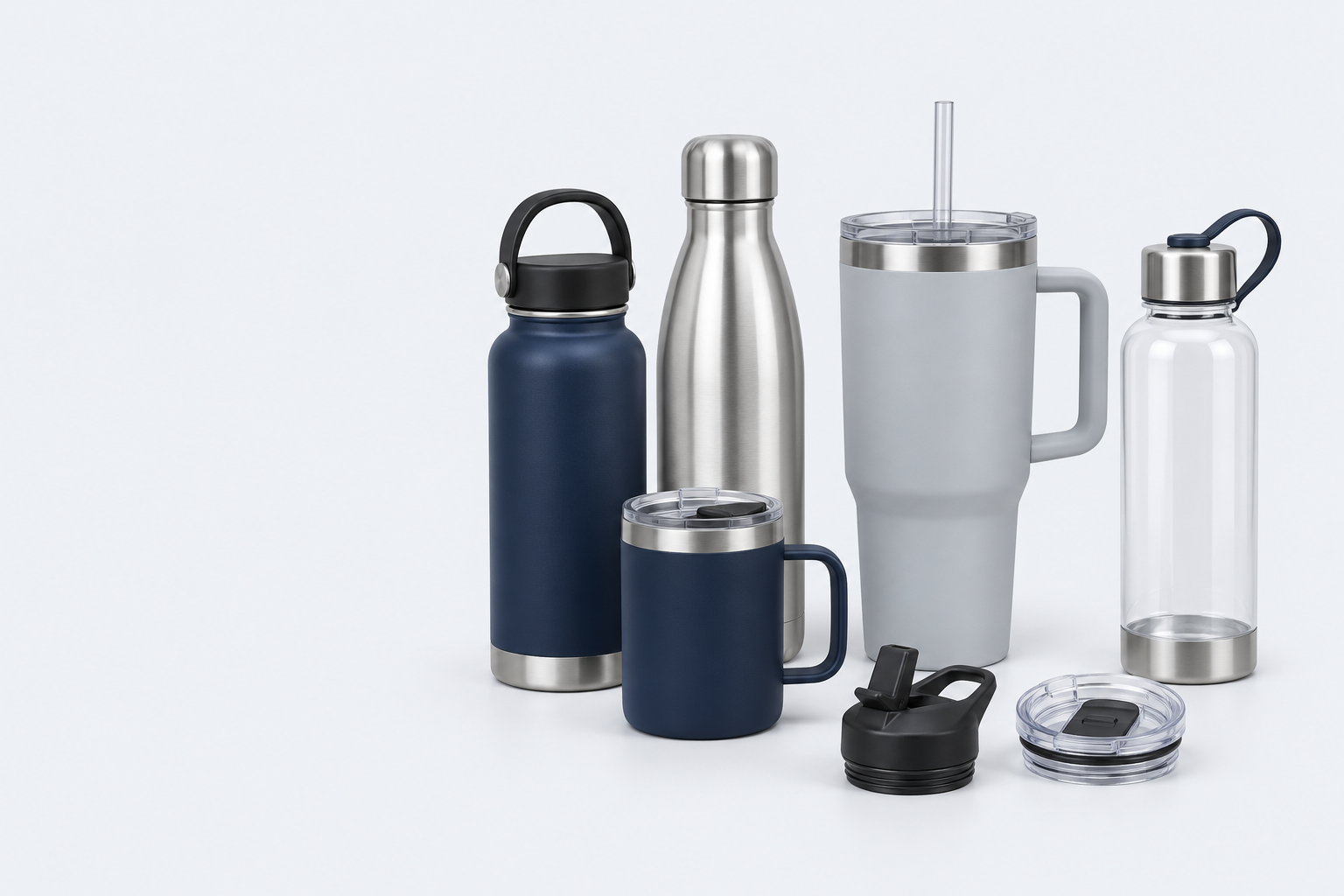
- LT Vacuum Water Bottles (350 ml, 550 ml, 750 ml).
- BB Handled Straw Tumblers (30 oz, 40 oz).
- MK Insulated Handle Mugs (14 oz, 16 oz, 25 oz, 32 oz).
Ready to Discuss Your Drinkware Project?
Bring your product references, estimated quantities and requirements into one brief.