
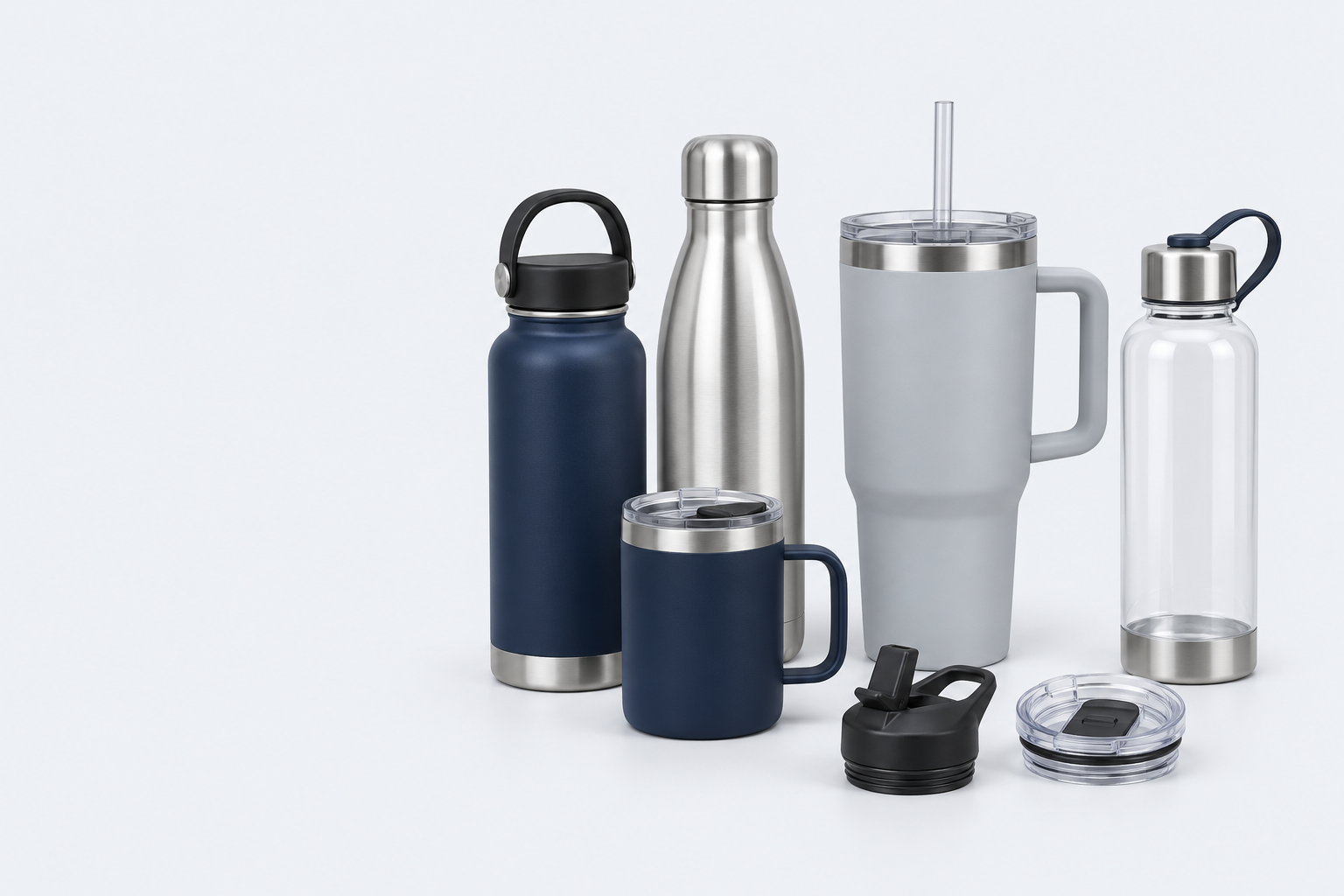
MATERIAL SPECIFICATION
Materials Guide
Review the body, lid, seals and accessories as an assembly, with the intended use and target market in mind.
Specify the Product as an Assembly
Body Materials
State the required base material and construction. If a grade or supplier reference is essential, record it in the product specification.
- Body and liner material
- Construction and capacity
- Surface and appearance requirements
Lids & Rigid Components
Review the lid, handles and accessories as part of the complete assembly. Material selection should support the specified use and component fit.
- Closure and assembly requirements
- Color and appearance
- Use and care expectations
Seals & Flexible Parts
Define the seal, straw or flexible accessory by its role in the assembled product. Changes should be reviewed for fit and intended operation.
- Interface dimensions
- Required flexibility and fit
- Replacement and accessory scope
Coatings & Decoration
Specify the coating or decoration separately from the base material. Confirm appearance, placement and any agreed surface checks on a sample.
- Color and texture references
- Decoration method and artwork
- Approved sample and review criteria
Information to Include in the Material Brief
| Part of the product | What to specify | What to review |
|---|---|---|
| Body / Liner | Material, capacity and construction | Approved product specification and sample |
| Lid / Handle | Material, color and closure requirements | Component fit and assembled appearance |
| Seal / Straw | Material reference and interface | Fit and agreed functional checks |
| Surface / Decoration | Finish, color, method and artwork | Decorated sample and appearance criteria |
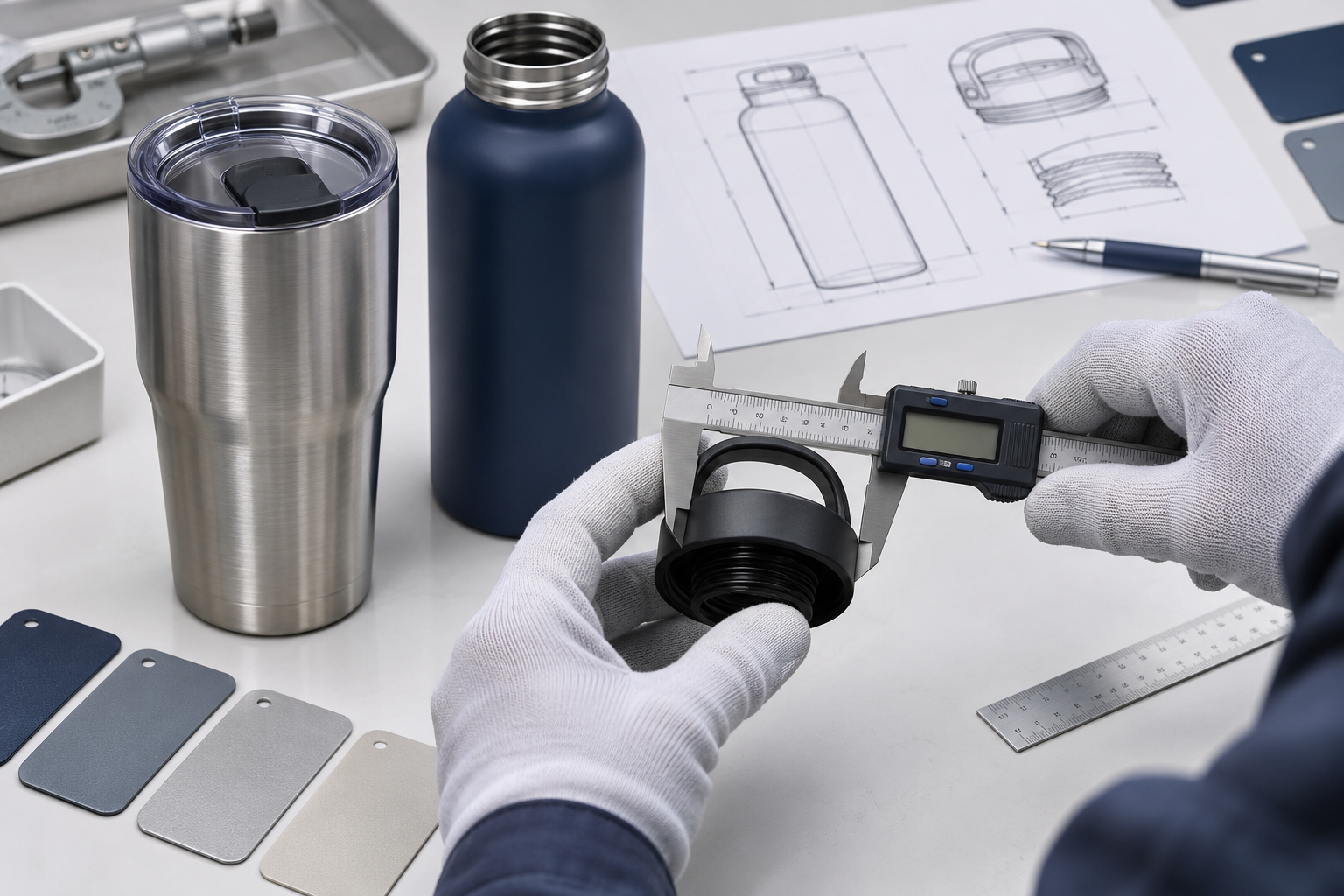
EVIDENCE & REQUIREMENTS
Match Documents to the Actual Product
Tell us which records and checks your business needs for the destination market. Material documents and test reports should identify the relevant product or component and be reviewed for applicability.
A material name alone does not establish every performance, care or market-access claim for the assembled product. Agree the required verification scope before approving public claims.
- Identify each component and revision
- Record the required material references
- Define the supporting document scope
- Review changes before production
Choose a material for the actual assembly
A useful material comparison covers the body, lid, seal, straw, coating and intended drink conditions. The material name on the body cannot settle leakage, cleaning, insulation or the status of every other component. Start with the customer use, then ask for the identified construction and supporting records.
| Option or claim | What the buyer needs to compare | Evidence or sample question |
|---|---|---|
| 304 and 316 stainless steel | An identified grade for each relevant part, surface condition and intended beverage/use. 316 is a molybdenum-containing grade with a different corrosion-resistance profile; it is not a blanket finished-product safety certificate. | Which component is made from which grade, and what supports its intended use? |
| Single-wall and double-wall construction | Wall construction and vacuum insulation are different specification details. Compare weight, intended drink conditions and the actual thermal claim. | What construction does the sample represent and under what conditions was performance assessed? |
| Named copolyester such as Tritan | Resin identity, component scope, decoration and the finished assembly. A clear appearance cannot identify a resin. | Can the material statement be linked to the quoted body and its revision? |
| Unspecified plastic or acrylic-style wording | The actual resin and use/care information; a catalog style description may not identify the material. | What are the body, lid and straw made from? |
| Silicone parts and foldable bodies | Actual part identity, assembly, cleaning access and intended conditions. | Which seals, carrying parts or body elements are supplied and how are they reviewed? |
Why 18/8, BPA-free and double wall answer different questions
A grade reference describes a material choice; BPA-free addresses a particular claim; double wall describes construction. None of those phrases identifies all of the lid, seal, print, coating and accessories. Keep the bill of materials and use description alongside any report or statement.
For a named resin, obtain the material identification and review what the statement actually covers. Eastman describes Tritan as a BPA-free copolyester; that statement should not be stretched into certification of an assembled item from another supplier.
How to make a like-for-like material comparison
Compare the same capacity, closure, finish, decoration and pack before attributing a price difference to the metal or resin. Ask the supplier to separate a grade change from a body thickness, lid or coating change.
Where your brief includes acidic drinks, heat, repeated cleaning or another demanding condition, state it before material selection. Use suitable technical review and item-specific evidence for that actual application instead of a universal grade ranking.
Example: two quotes both say stainless steel
Quote A names the inner and outer body material but omits the lid resin. Quote B names the lid and seal but uses only an 18/8 body description. Neither is a complete comparison. Put both into one component list, request the missing identities and compare the same assembly and intended use before choosing on price. This is a buying example, not a completed customer project.
Specific questions about this decision
Does 316 automatically make the bottle safer?
A grade alone does not settle the finished article’s suitability. The actual construction, other components, drink conditions and relevant evidence still matter.
Does double wall mean vacuum insulated?
Do not infer a vacuum from wall count. Confirm the construction and the thermal-performance basis for the selected sample.
Does a resin statement cover the lid and decoration?
Only to the scope it actually identifies. A statement about a body resin should not be treated as evidence for every part of the assembled item.
Source notes and further reading
Sources explain the referenced material or guidance. They do not certify our company, an unreviewed product or a particular order.
Continue with the next decision
Model references for this enquiry
Tie the material question to the exact model and assembly you intend to order.
- LT Vacuum Water Bottles (350 ml, 550 ml, 750 ml).
- BB Handled Straw Tumblers (30 oz, 40 oz).
- MK Insulated Handle Mugs (14 oz, 16 oz, 25 oz, 32 oz).
Ready to Discuss Your Drinkware Project?
Bring your product references, estimated quantities and requirements into one brief.