
PRODUCT DEVELOPMENT GUIDE
Drinkware Design Guide
A structured starting point for discussing a new or customized drinkware product.
A useful design brief explains the required outcome before it names every production detail. Start with the user and intended use, then record the product, visual and commercial requirements that guide the project.
Start With the User
Describe where and how the item will be used: commuting, desk use, outdoor activity, gifting or retail sale. Explain what matters most, such as carrying comfort, lid operation, pack size or a specific visual identity.
Identify requirements that are essential and preferences that can be reviewed. This makes it easier to compare a new design with an existing format.
Define the Product Envelope
State the desired capacity, overall dimensions and weight expectations. Include reference photos or a sample and mark any dimensions that must fit another object, storage space or packaging.
Capacity and dimensions should be checked on the approved specification and sample. Similar-looking products may differ in useful volume, component fit or handling.
Treat the Lid as Part of the System
Describe how the user opens, drinks, carries and cleans the product. Identify the expected lid, handle, straw, seal and any detachable accessories.
Write functional expectations as review points. Claims such as leak resistance, insulation or care suitability need a defined verification basis before they are used in marketing.
Specify Appearance Clearly
Provide vector artwork, color references, finish preferences and branding positions. Distinguish body color, lid color, texture and gloss level.
A decorated physical sample is a stronger approval reference than a screen rendering. Record the approved artwork version and any accepted variation.
Plan Packaging at the Same Time
Explain the sales channel, unit packaging, insert requirements, carton quantities and destination. Packaging should be sized around the approved product and accessory configuration.
Include buyer labels, barcodes and receiving requirements early so the artwork and packing plan can be checked together.
Set the Approval Gates
Define which sample stage answers which question, who approves it and what records are needed. Keep the product specification, artwork and packaging revisions synchronized.
Before production, close outstanding issues and confirm the agreed quantity, approved sample, inspection scope and shipment requirements.
Your Brief Checklist
- Use setting and target buyer
- Capacity and dimensional references
- Lid, handle, seal and accessories
- Material and appearance requirements
- Artwork and packaging files
- Quantity, destination and target timing
Turn the use case into a product brief
Design decisions start with the recipient, beverage and carrying routine. Capacity, lid and body shape influence each other; a photo of an attractive cup does not explain how the complete product should work. Separate essential features from preferences that can be compared on samples.
| Design decision | Trade-off to make visible | Useful brief input |
|---|---|---|
| Capacity and overall size | More volume changes filled weight, height, grip and packing. | Working fill, external dimensions and the recipient’s routine. |
| Screw, spout, slider or straw lid | Drinking access, carrying conditions, detachable parts and cleaning differ. | A description of opening, drinking, carrying and washing. |
| Handle or carrying loop | Grip clearance and appearance can affect fit, assembly and carton size. | Intended carrying method and any measured storage constraint. |
| Base, taper and body shape | A visually similar item can fit a different cup holder or printable fixture. | Actual interface dimensions and the scope of any compatibility claim. |
| Press, filter or holder feature | A feature adds an operating sequence and an acceptance task. | The exact mechanism, supplied parts and a use demonstration brief. |
Leakproof and spill resistant need a defined condition
A covered opening or steel body is not enough to establish a sealed bag-carry product. State the carrying position, closure condition and relevant use routine when requesting a leakage assessment. The selected lid and seal are part of the result.
Likewise, separate insulation from closure. A product can have an insulated body while using a lid intended for upright sipping. The customer-facing wording must match the configuration being sold.
Make interface claims measurable
Cup-holder fit, replacement-lid fit and phone compatibility all describe interfaces with something else. Identify the actual holder, neck, device or case and the relevant dimensions. Review samples under that stated scope.
For a new structure, prepare drawings or an agreed dimensional brief and record which parts are still provisional. A visual prototype can help judge shape without proving seal, thermal or production performance.
Example: a buyer asks for a larger car tumbler
The buyer first identifies the intended holder dimensions, filled-handling preference and lid routine. Several bodies can then be compared on base, handle clearance and volume. The chosen sample is photographed with its actual lid and supported fit description. This avoids selecting the largest nominal capacity and discovering later that the handle or base prevents the intended fit.
Specific questions about this decision
Can we begin without engineering drawings?
Yes, begin with a use brief, reference and must-have features. New interfaces and structure still need an identifiable design scope before final approval.
Does a new color count as a new design?
It changes appearance and may affect order quantities or process work. It does not automatically require new product tooling.
What should remain with the approved sample?
The item and component references, drawings or dimensions, artwork, accepted changes, intended use and relevant approval conditions.
Continue with the next decision
Model references for this enquiry
Compare a listed body with the design brief before deciding which dimensions or components need development.
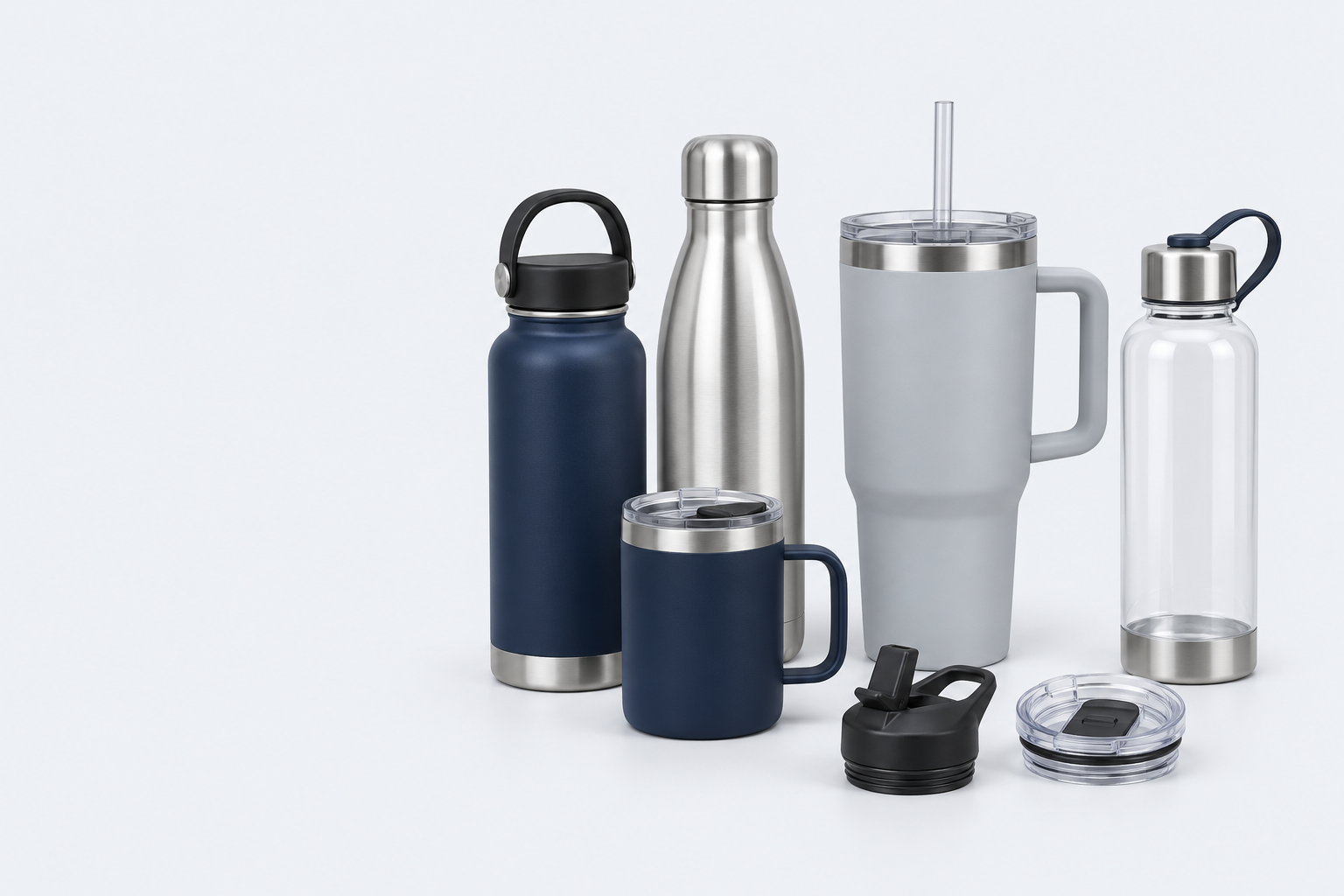
- LT Vacuum Water Bottles (350 ml, 550 ml, 750 ml).
- BB Handled Straw Tumblers (30 oz, 40 oz).
- MK Insulated Handle Mugs (14 oz, 16 oz, 25 oz, 32 oz).
Ready to Discuss Your Drinkware Project?
Bring your product references, estimated quantities and requirements into one brief.