
MATERIALS, ASSEMBLY & FINISHED GOODS
Quality checks for your order.
Know what will be checked, what the result means and whether the supporting evidence applies to the product you are buying.
Brands · importers · wholesale · business gifting
Updated 21 November 2026
How will your order be judged?
You need to know which product was checked, what the inspection covered and which criteria were used. Those details let your team judge the result against the order it approved.
Quality-system, site-audit and test-report previews
Review the company name, site and document type below. These are previews from our company catalogue; use the complete document when checking validity, the inspected site or the tested product.
ISO 9001:2015
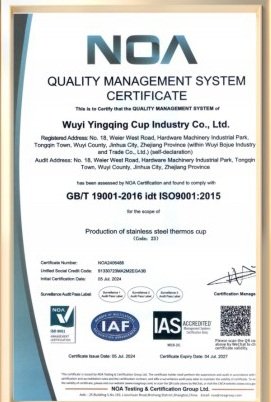
The certificate preview states stainless steel thermos cup production in its scope. Request the full current certificate for the site and validity details.
SMETA report cover
The company overview includes a SMETA report cover. Request the complete, named-site audit record and audit date when preparing supplier approval.
TÜV Rheinland test report
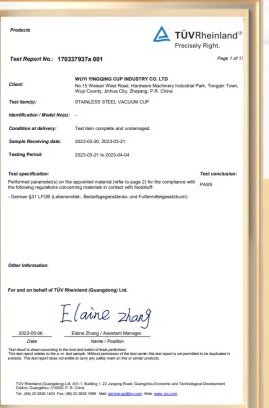
The preview identifies a stainless steel vacuum cup as the test item. Review the complete report against the model, materials and components selected for your order.
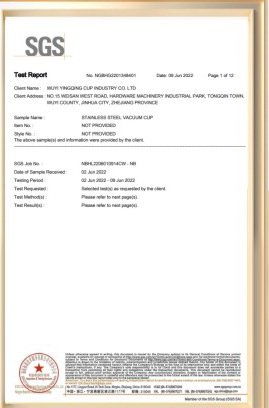
SGS test report
The report preview identifies the company and a stainless steel vacuum cup sample. Confirm the tested item and report scope before using the record for a different configuration.
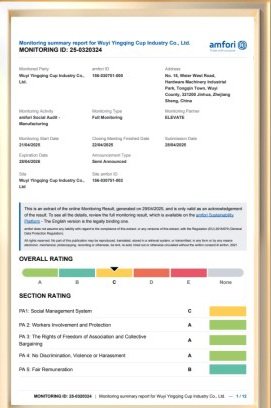
amfori BSCI monitoring
The preview shows a factory monitoring summary. Request the full site record and audit date for your customer or sourcing review.
A management-system certificate, a factory audit and a product test report cover different questions. Tell us which company approval, product model and destination your document review concerns.
Download the company overview and document previews (PDF) · Request documents for your enquiry
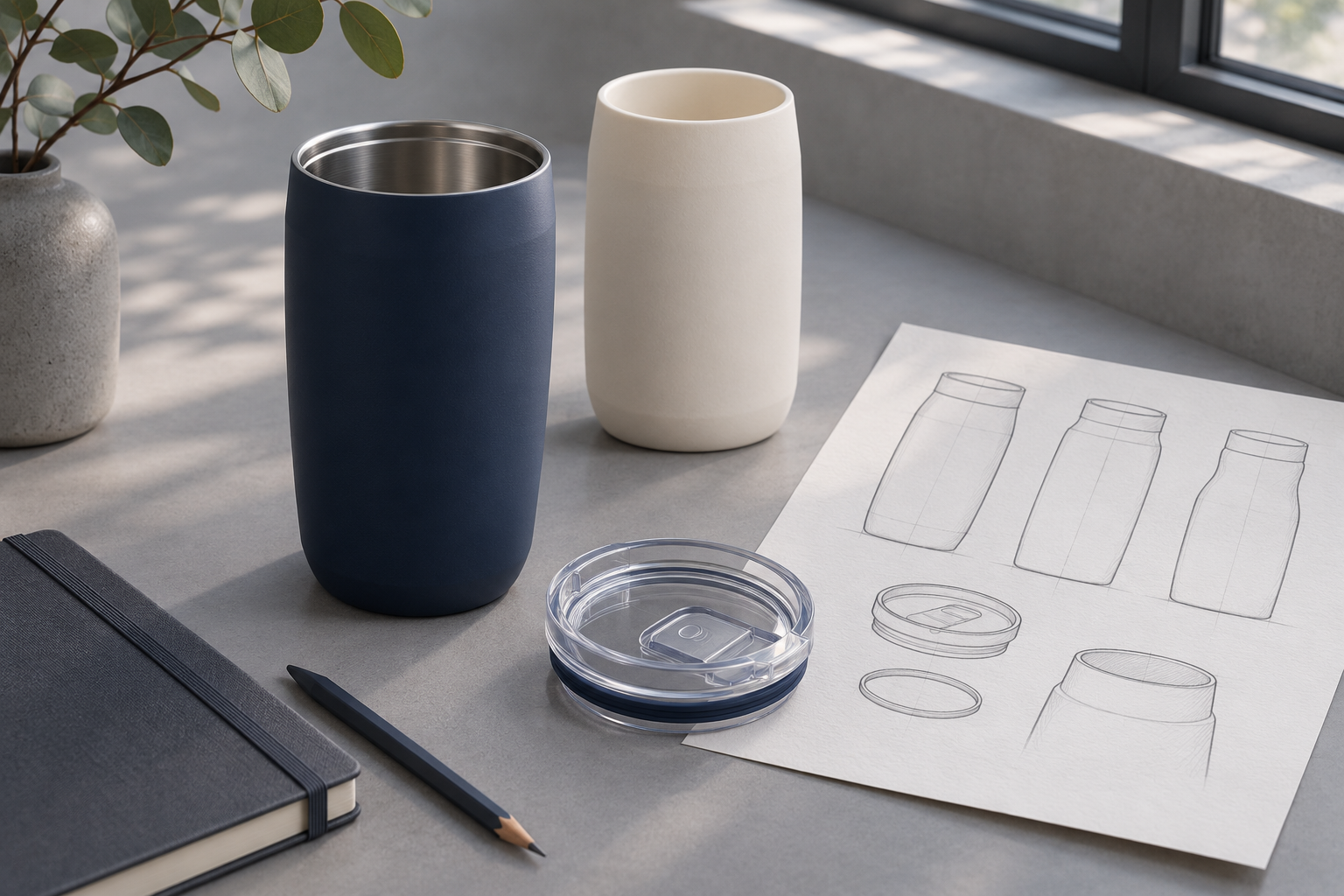
THE APPROVED SAMPLE
What is the order being compared with?
An identified sample and matching product, artwork and packing files give your team a consistent comparison. They should describe the same body, lid, accessories and appearance.
Any accepted exception should remain visible. If the sample carries a temporary part or an unfinished color, you need to know which decision still requires another review.
- Item code and product revision
- Approved sample and artwork files
- Accepted exceptions and open changes
DIMENSIONS & FIT
Can you understand what the result means?
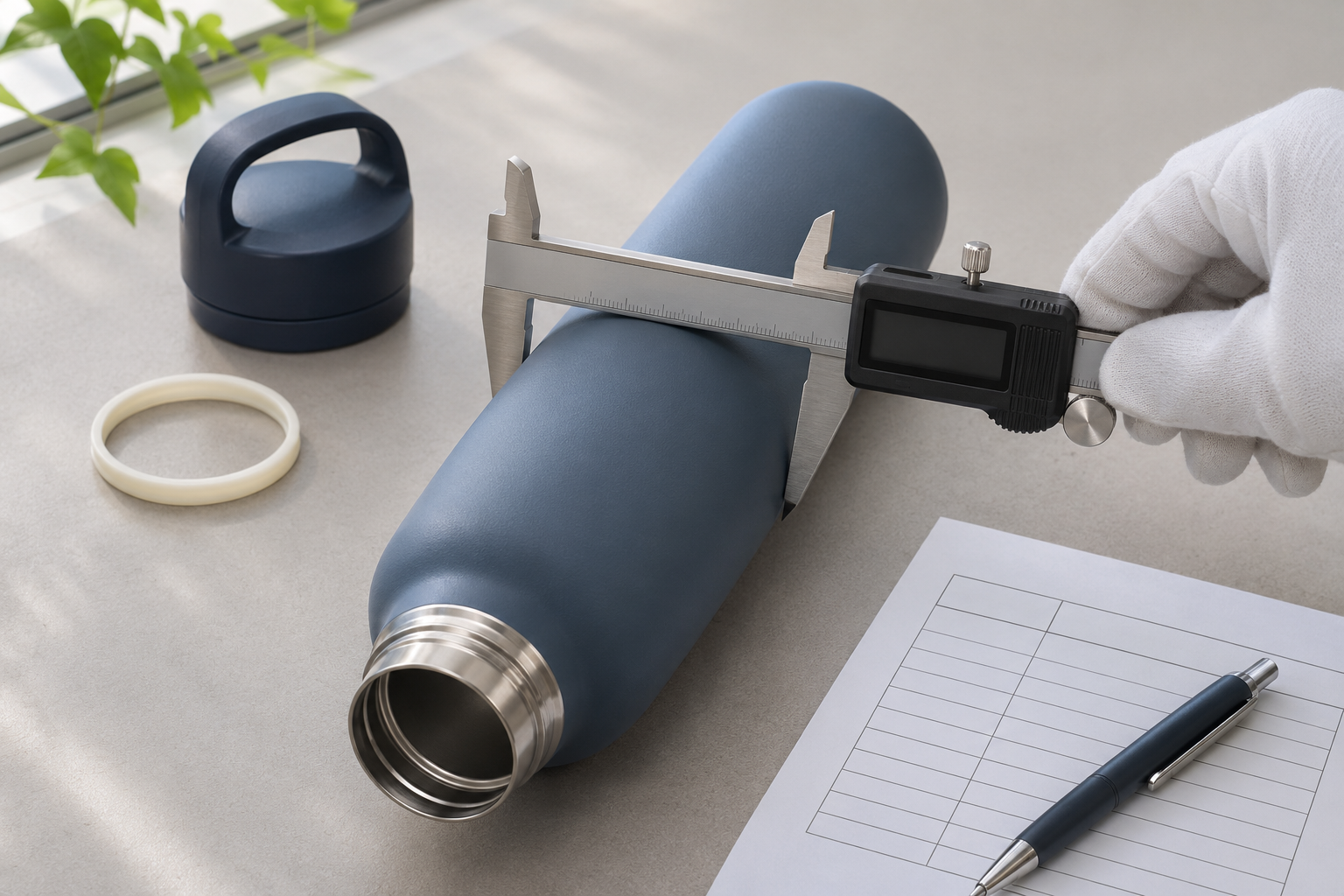
A measurement needs reference points; a lid-fit review needs the actual body, closure and seal. Identifying those details and the checked quantity lets you relate the finding to your order.
If a concern appears, a photo linked to the product version and the expected requirement gives your team a stronger basis for discussion than an unlabelled image or an assumed cause.
- Named feature or dimension
- Method and agreed acceptance basis
- Item, sample or lot reference
Which parts of your order will be reviewed?
| Point in the order | What may need review | The reference to use |
|---|---|---|
| Materials and parts | Identification and agreed component requirements | Current parts list and supporting records |
| Assembly | Fit, included components and agreed operating checks | Released product version and sample |
| Decoration | Color, surface appearance and artwork placement | Approved physical reference and artwork |
| Packed units | Accessories, inserts, labels and packing configuration | Packed sample and final files |
| Handover | Carton information and requested documents | Packing list and agreed document scope |

APPEARANCE
Does the appearance match your approved sample?
Your approved appearance reference provides a basis for judging color, texture, coverage and logo placement. Consistent review conditions and marked photos help everyone assess the same visible difference.
For a multi-variant order, findings should identify the affected color or artwork version and quantity. That makes it easier to understand the extent of an issue and the stock it concerns.
- Physical appearance reference
- Variant and inspected quantity
- Photos tied to the named concern
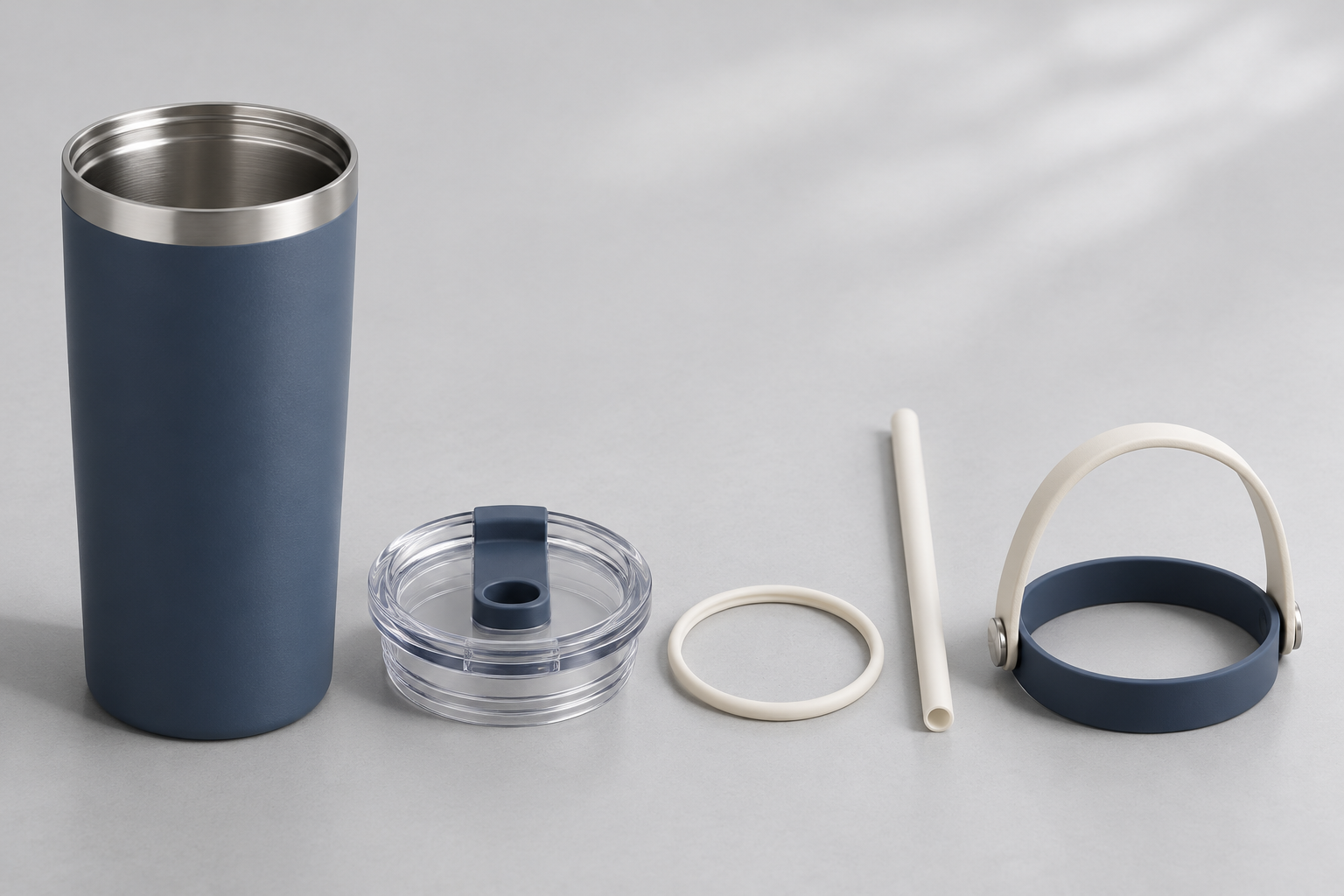
FUNCTIONAL QUESTIONS
Does the evidence apply to your product?
Leak-related, temperature-retention and cleaning results depend on the product and review conditions. A result is more useful to your buying decision when those conditions are stated.
You should be able to connect a performance statement to the tested construction, method and acceptance basis. A different lid, finish or use condition may need another scope review before that evidence is relied on.
- Actual product and component version
- Method, conditions and observations
- Scope behind any published claim
The detail behind a useful test result
| For this characteristic | Make these details explicit |
|---|---|
| Lid operation or fit | Assembly, operating method, parts and agreed criteria |
| Leak-related behaviour | Liquid, fill level, orientation, duration and handling |
| Temperature retention | Starting conditions, liquid volume, ambient conditions and reading times |
| Finish or decoration | Surface, cleaning or handling procedure and observed changes |
| Packing protection | Complete pack configuration, review method and findings |
These are planning fields, not published test results for a model. The actual checks and acceptance rules are agreed for the order.
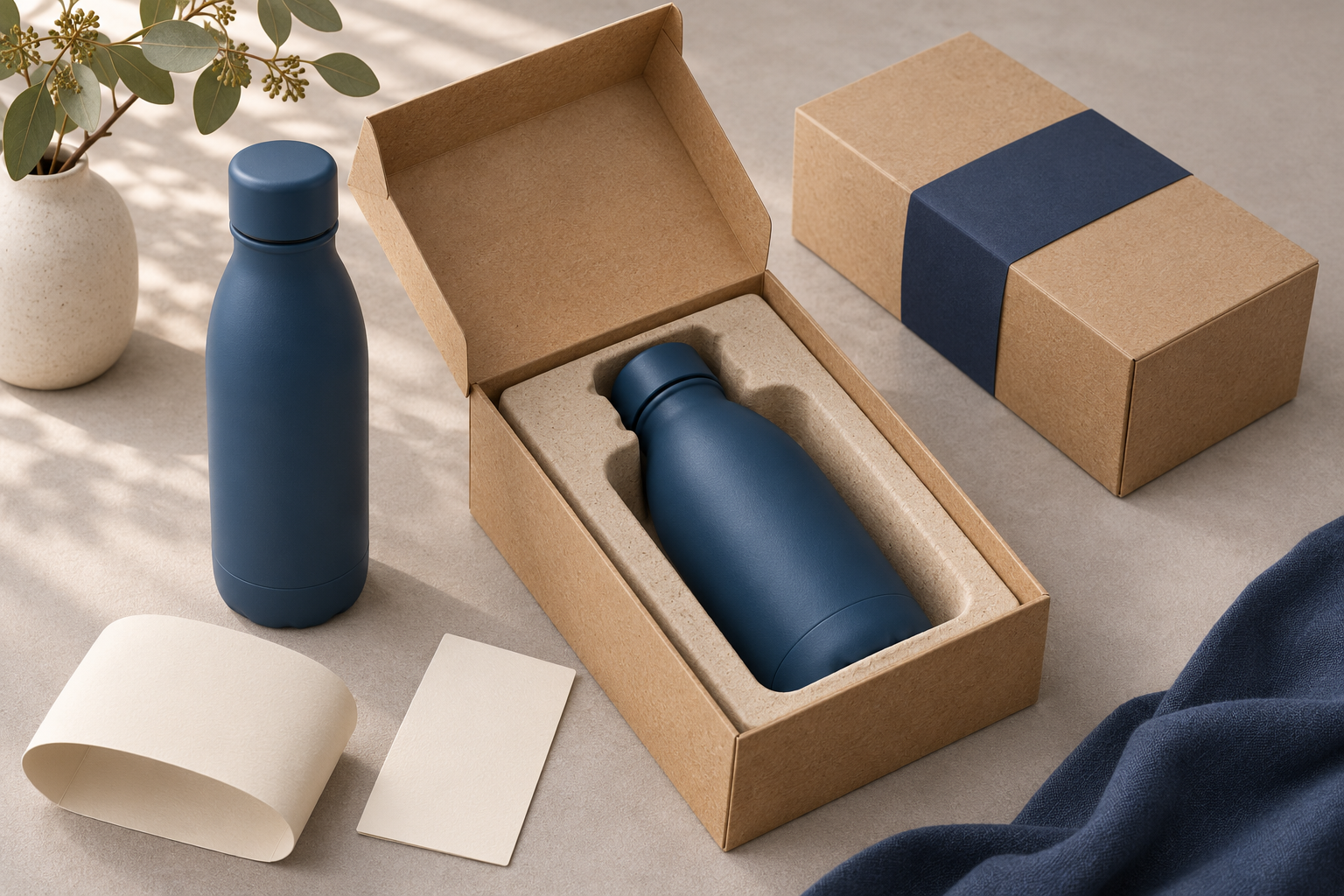
THE PACKED UNIT
Will your team receive the correct packed item?
The packed-unit review should cover the contents your team expects: product, accessories, instructions and inserts. Artwork, labels and quantities need to match the approved packing files.
Consistent carton markings, item codes and packing-list data help your warehouse identify the goods. Any required receiving labels or location-specific instructions should be part of the agreed packing configuration.
- Complete contents and pack arrangement
- Final artwork and receiving labels
- Variant counts and carton information
A certificate and a product report answer different questions
| Record | Look for | What to avoid assuming |
|---|---|---|
| Company or site certificate | The named organization, site, scope, issuer and dates | That it proves every property of a product |
| Product test report | The model, materials, components, method and reported result | That every variant falls within the same scope |
| Relevant declaration | The responsible party, product and stated basis | That one format covers every construction or market |
| Order inspection report | The order, checked quantity, criteria and findings | That unmeasured features were also checked |
If there is a problem, what information will help?
Which goods are affected?
The order reference, item code, product version and received, checked and affected quantities help define the extent of the concern. Carton or lot details can make the affected stock easier to identify.
What differs from your approval?
Photos and observations linked to the accepted requirement help explain the difference. Relevant packing and representative items may be needed while further review and the applicable resolution are discussed.
Use an acceptance plan that matches the failure risks
A quality plan should connect the accepted sample and specification to the actual order. Appearance, dimensions, assembly, function, packed contents and relevant documentation need their own checks. A general passed label cannot show which item, quantity, method or requirement was examined.
| Check area | Define before inspection | Useful evidence |
|---|---|---|
| Appearance and artwork | Reference, viewing conditions, location and agreed acceptance. | Identifiable photos and accepted physical references. |
| Dimensions and interfaces | Critical dimensions, mating parts and measurement basis. | Recorded measurements linked to the item revision. |
| Lid and closure function | Complete assembly, intended conditions and agreed check. | A repeatable record of observed operation or leakage assessment. |
| Specialty features | Mixing, press, strainer, holder or module scope as applicable. | Feature-specific configuration and result. |
| Packing and identification | Complete contents, protection, quantities and approved labels. | Pack-out review and carton/item identifiers. |
| Inspection scope | Lot, inspected quantity, agreed sampling and release responsibilities. | A report that states limits and any unresolved issues. |
A sample check is not automatically a whole-lot guarantee
State the lot and scope examined, methods used and the agreed basis for interpreting results. If sampling is used, the buyer and supplier need an appropriate plan and defect definitions for the actual risk. Do not invent a universal acceptance threshold for every cup.
Distinguish a visual defect, missing part, incorrect label and functional issue. Their significance and response can differ. Keep nonconformities and the decision on any correction, recheck or release identifiable.
Example: an acceptable body with an incomplete selling unit
The body finish matches the approved sample, but the packed set lacks a second lid and uses an old label. An appearance pass on the cup does not accept the selling unit. Check complete contents and identifiers against the pack-out, record affected scope and resolve it through the agreed process.
Specific questions about this decision
Does insulation prove leak resistance?
No. They address different requirements and need the appropriate review for the actual construction and closure.
What should an inspection report identify?
Order and item revisions, inspected scope, methods, results, observed issues and the applicable release decision.
Continue with the next decision
Questions before you order
What inspection level or AQL applies?
Sampling and acceptance rules are agreed for the order and the relevant characteristics. No single threshold is stated here for all products. Ask which method and criteria apply to the particular feature being reviewed.
Does a company certificate prove product suitability?
It covers its own stated scope. Product materials, construction, intended use and destination need their own review and supporting evidence. Check the actual document, not just the name or logo.
Can one test report cover several models?
Check the identified product, material and component scope against the models being ordered. A difference in a lid, coating, assembly or use condition may require another review before the report is relied on.
Who approves a deviation?
Name the people with authority to approve an exception and record what they accepted, for which item and quantity. Keep that decision with the order and the reference used for the inspection.
What happens after an issue is reported?
The evidence and affected scope need to be reviewed against the order. Further inspection, returns, sorting, rework, replacement or another remedy depend on the circumstances and the applicable agreement. No standard refund or replacement promise is implied.
How do findings carry into the next order?
Record the agreed corrective action and update any affected drawing, sample, packing or inspection reference. Review that change before the next order is released.
Model references for this enquiry
Use the selected model when defining the sample reference and agreed checks.
- LT Vacuum Water Bottles (350 ml, 550 ml, 750 ml).
- BB Handled Straw Tumblers (30 oz, 40 oz).
- MK Insulated Handle Mugs (14 oz, 16 oz, 25 oz, 32 oz).
Find the right starting point.
Whether you are building a new range, restocking a proven item or buying for an event, you can start with a photo, sample or drawing. Your quantity, destination and deadline will help shape the options worth discussing.