
SAMPLE REVIEW
Sample Approval Guide
Use a repeatable review to keep product, decoration and packaging decisions aligned.
A sample review should produce a decision that another person can understand later. Record what was checked, which version was reviewed and what remains open.
Identify the Sample
Assign a clear sample identifier and record the product, component and artwork revision. Include photos and the date of the review.
Check that the sample represents the configuration being ordered. If a material, process or component is temporary, mark that limitation explicitly.
Review Appearance
Compare color, finish, logo size, placement and surface quality with the agreed references. Review assembled components under consistent lighting.
Describe changes with measurable instructions or marked photos. Avoid approval comments that can be interpreted in several ways.
Review Fit & Function
Check the relevant dimensions, lid operation, accessory fit and agreed functional points. Confirm the purpose and limits of any tests used in the review.
A visual review alone does not establish every performance or compliance claim. Keep separate verification requirements in the product specification.
Review Packaging
Check the complete packed unit, inserts, user information, artwork and carton arrangement. Confirm the barcode and receiving label data against the buyer’s files.
Photograph the approved packing sequence where it helps prevent ambiguity. Keep the final artwork and packing specification together.
Close the Approval
List approved features, requested changes and any conditions. Assign responsibility for each open item and identify whether another sample is required.
Release production only against the agreed configuration and approval record. Retain the relevant reference sample where practical.
Your Brief Checklist
- Sample and drawing revision
- Appearance review record
- Fit and agreed functional checks
- Artwork and packaging approval
- Open issues and required changes
- Named approver and retained reference
Approve what the sample actually demonstrates
A sample is useful when its purpose is clear. An existing undecorated model can help select size and handling; an appearance sample can help judge color; a functional assembly or packed sample answers different questions. Record what is accepted and what remains open instead of using one informal approval for every stage.
| Sample type | Useful decision | Limit to record |
|---|---|---|
| Reference model | Size, handling, opening and initial product selection. | It may not contain the final color, material, decoration or packing. |
| Visual or dimensional prototype | Shape, layout and interface discussion during development. | Provisional material or construction may not represent production performance. |
| Decorated sample | Artwork, position, finish and visible appearance. | It does not automatically establish functional or document acceptance. |
| Functional assembly | Defined lid, seal, mixing, holder or module operation. | State the actual configuration and review conditions. |
| Complete packed unit | All components, product information, labels and presentation. | Transport acceptance and carton requirements still need their agreed basis. |
Write an approval record that can survive a reorder
Use a sample identifier, date, product and component revision, artwork file and pack reference. Mark accepted details, rejected details and any conditional acceptance. The approver should be identifiable for each scope.
Keep a retained reference where practical. If photos are used, record what they can show and the conditions under which color, texture or function still need a physical comparison.
A change can reopen part of the approval
A new lid, coating, handle or module can affect more than appearance. Identify the affected fit, function, care, packing and evidence before treating the change as cosmetic. A small part number change may still matter.
Decide whether a repeat sample, targeted review or another agreed check is needed. Do not erase the earlier reference; connect the new revision to the change decision so the next order has a clear starting point.
Example: approved color, unapproved lid
A buyer approves the navy coating on an existing bottle sample, while the proposed straw lid is still being developed. The record should accept the coating only and leave closure, complete function, packed contents and related product information open. A short reply saying sample approved would incorrectly merge those decisions.
Specific questions about this decision
Does a sample photograph approve leakage?
A photograph can show configuration or appearance, but it cannot establish an operating check. Keep any functional review and conditions separately recorded.
Who should approve a multi-item gift set?
Assign an owner for the complete set and identify any separate artwork, product or operational approvers.
What if the sample has a temporary component?
Label the provisional part and state which decisions the sample can support. Review the final part before closing affected approvals.
Continue with the next decision
Model references for this enquiry
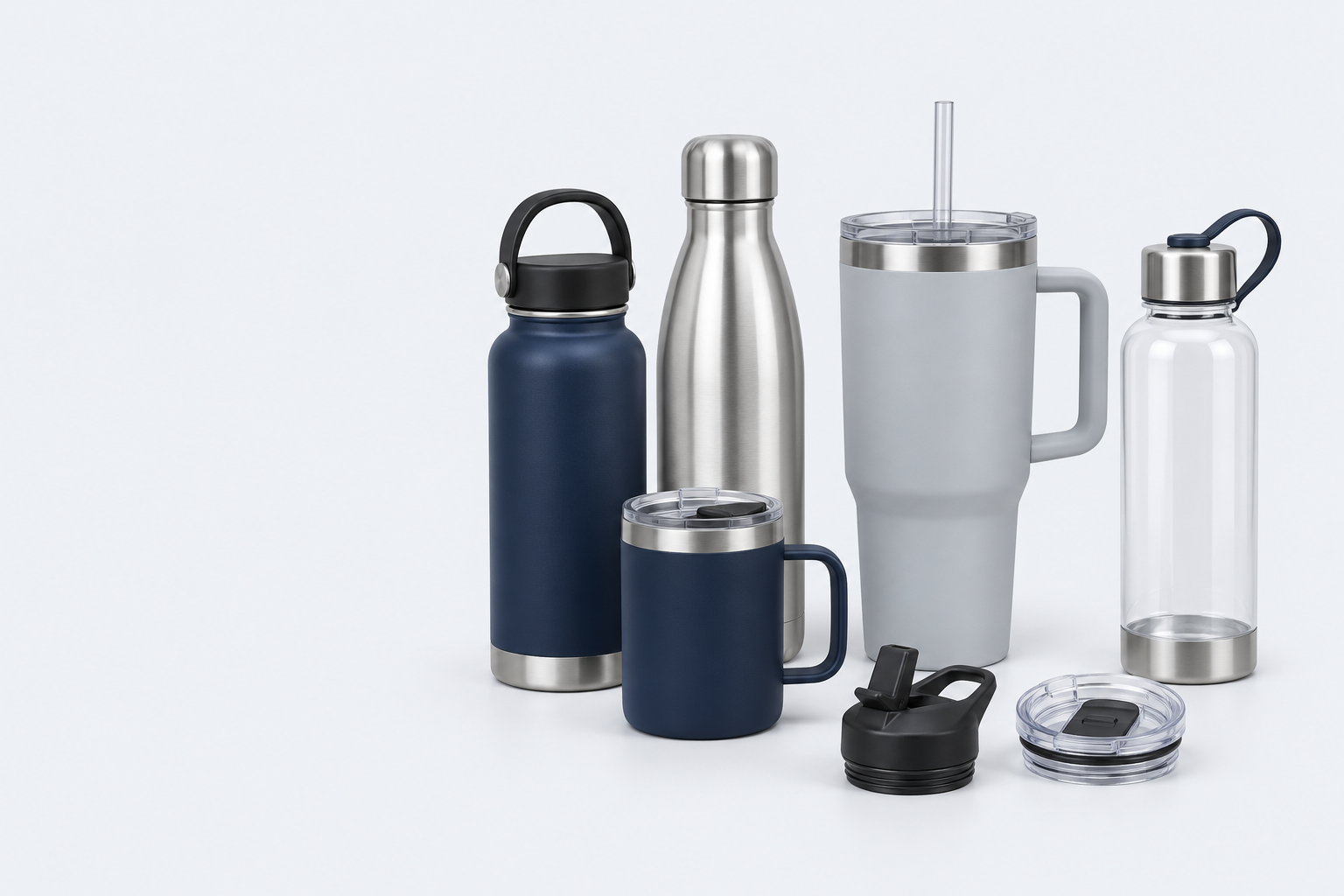
Use the product reference to identify the body, lid, finish, artwork and packing included in approval.
- LT Vacuum Water Bottles (350 ml, 550 ml, 750 ml).
- BB Handled Straw Tumblers (30 oz, 40 oz).
- MK Insulated Handle Mugs (14 oz, 16 oz, 25 oz, 32 oz).
Ready to Discuss Your Drinkware Project?
Bring your product references, estimated quantities and requirements into one brief.