
BUSINESS BUYING PROGRAMME
Brewery & Distillery Drinkware
Choose brewery and distillery drinkware around serving, can holding, mixing or shop merchandise. Specify the beverage or actual container format, then agree branding and the complete selling or gift unit.
For business orders, branded ranges and procurement teams.
Start with the recipient and distribution plan
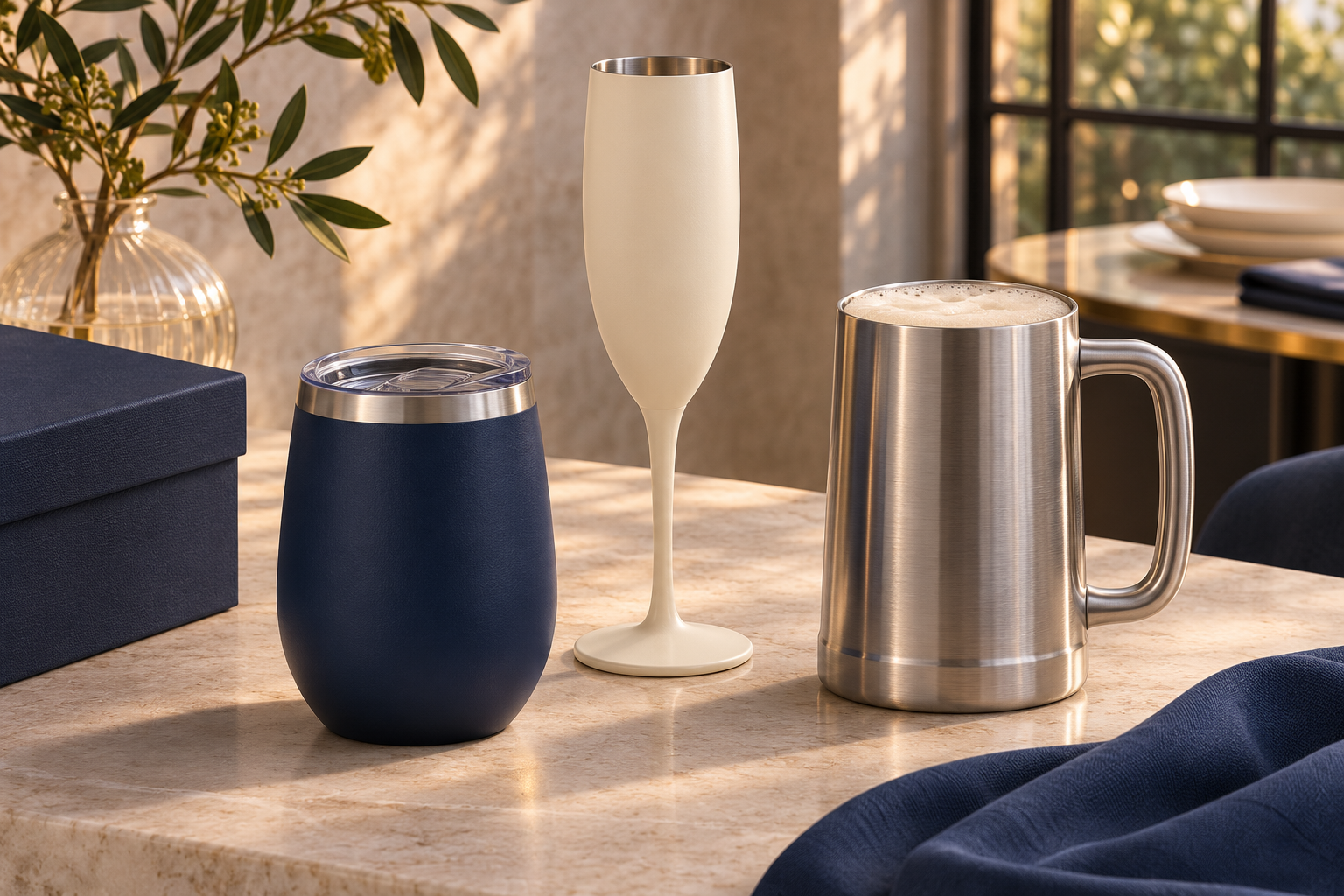
Brewery and distillery merchandise connects a drinkware format to the brand’s actual beverage, serving ritual or shop range. Start with the vessel or container interface: a beer mug, a can cooler, a small tasting cup and a cocktail vessel serve different purposes. Keep service units, shop merchandise and gift sets separate in the quote so contents and packing can be compared fairly.
For a can cooler, provide the actual can dimensions. For serving vessels, give usable serving volume and the intended presentation. For a gift, define the complete set. A beverage-brand graphic does not resolve the fit, serving or packing requirements of the underlying item.
| Buying route | Review before choosing | Order detail to keep visible |
|---|---|---|
| Taproom or tasting vessel | Usable serving volume, handling and presentation | Avoid treating nominal capacity as a calibrated measure. |
| Can-cooler merchandise | Exact can dimensions, retention and any adapter | Check each advertised can format with the selected assembly. |
| Distillery or cocktail gift | Cup, shaker or accessory list and gift box | Identify every component in the selling unit. |
Buying situations to plan for
The examples below show different briefs a procurement team may need to resolve. They are planning examples, rather than records of completed customer projects.
A brewery expands taproom merchandise
The taproom wants a branded mug for visitors to buy. Choose the selling unit, mark orientation and any retail carton or tag.
Approval point: Review the mug with the planned artwork and merchandise display.
A festival plans a collector mug
Attendees can buy or receive a dated reusable mug. Set event artwork, serving intent, distribution points and spare quantities.
Approval point: Approve the decorated sample and event pack-out.
A distributor creates a brewery gift set
A trade gift pairs branded mugs with separately sourced beverage items. List the complete set, supplier responsibilities and protective insert.
Approval point: Approve the full pack and artwork for every supplied item.
A spirits brand launches branded merchandise
A campaign needs drinkware associated with an approved serve. Provide the serving brief, artwork authorization and planned selling or giveaway unit.
Approval point: Review the actual vessel with the intended presentation.
A spirits brand orders tasting merchandise
A branded mini vessel supports a defined tasting or retail programme. Set the intended serve, selling unit and mark position.
Approval point: Review the sample and any approved wording around volume.
A brewery buys coolers for its own cans
The taproom wants a branded accessory that fits its current packaged drink. Provide the actual can format and specify logo orientation and the selling unit.
Approval point: Check insertion, retention and drinking clearance with that can.
An RTD brand compares standard and slim-can programmes
A new packaged beverage needs matching promotional accessories. Compare each container format and list any separate cooler or insert required.
Approval point: Approve all intended container-and-cooler combinations.
A spirits brand develops a cocktail kit
A campaign pairs a branded shaker with approved serving information. Specify the actual shaker, other tools if included, artwork and kit responsibilities.
Approval point: Review shaking, straining, pouring and the complete pack.
Plan the sample, allocation and handover
Choose the beverage task
Separate serving, container holding, mixing and gifting. Select samples for the actual task.
Review the mark and range
Check artwork size on small cups, curved mugs or cooler bodies. Specify finish and range references by item.
Approve the selling unit
Open the boxed unit and check contents, care information and protection. Agree carton counts for the shop or distributor.
What to include in your enquiry
Use the following points as the starting brief. Mark undecided options clearly so the quotation can compare the same finished units and delivery responsibilities.
- Beverage, container dimensions or serving routine
- Vessel, cooler or shaker configuration
- Brand artwork and any licensed marks
- Retail, service or gift-set contents
- Quantities by taproom, shop or distributor
Questions procurement teams ask
Can a can cooler be selected from beverage volume alone?
Provide the actual can dimensions or samples. Standard, slim and other can shapes can differ even when their stated beverage volume is similar. Check insertion, retention and removal, including any adapter included in the order.
How should we compare quantity, packing and timing?
Ask for the quantity split by item and artwork version, the complete contents of one receiving or recipient unit, and the proposed route to your required arrival date. Keep individual gift packing, bulk cartons, assembly and freight visible where they apply. Confirm the chosen specification before relying on a price for a visually similar item.
Compare the formats for this programme
Custom Beer Mug Sourcing
Serving capacity, handle use and brewery or event merchandising
Cocktail Cup Sourcing
Serving format, rim and base geometry, finish and packing
Custom Shot Cup Sourcing
Small decoration areas, multi-piece sets and unit counts
Custom Can Cooler Sourcing
Actual can formats, retention, adapters and brand presentation
Custom Cocktail Shaker Sourcing
Body, cap and strainer fit, working volume and cleaning
Listed wine-cup references to review
Review the listed cup models for the wine-cup part of the merchandise brief. Confirm other requested barware formats separately.
- HJ 10 oz Stemless Cups (10 oz).
- DK 12 oz Wine Tumblers (12 oz).
- NN 12 oz Stemless Tumblers (12 oz).
Put the programme brief together
Send the recipient use, item options, quantities, artwork, packing and arrival needs. If your team is still deciding between formats, identify the options and the decision you need the quotation to resolve.