
NEW PRODUCT DEVELOPMENT
Molds & tooling for custom drinkware.
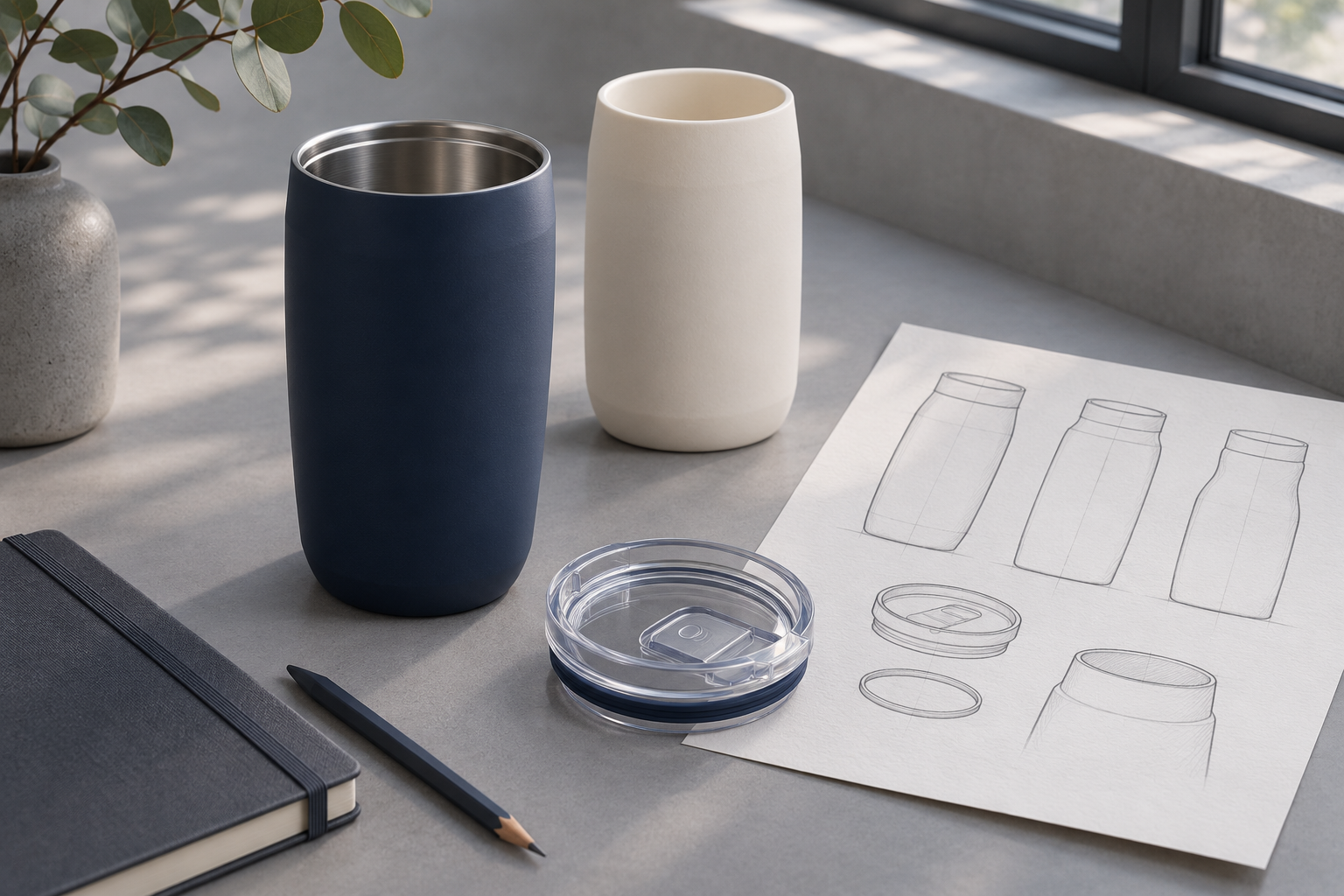
Find out whether your drinkware design needs new tooling, what the investment should cover and which approvals come before production.
New shapes · custom lids · original components
Updated 21 November 2026
First, decide what really needs to be new.
You may want a bottle with a distinctive shape, a lid that works differently or a handle made for a particular use. Those changes can need dedicated tooling. Choosing an existing model and adding your logo, color or packaging usually follows a different route.
Does your order need a new mold?
Start with the difference between your idea and an available product. The tooling scope should follow that difference, rather than assuming the whole product needs to be developed again.
| What you want to buy | The likely route | What to establish first |
|---|---|---|
| An existing model with your logo, color and packaging | Branding and customization, usually without a new product mold. Some decoration methods may need plates, dies or fixtures. | Which existing model and branding method give you the result you want. |
| An existing body with a new lid, handle or accessory | A component review; a new part may need its own mold or other tooling. | Whether the new part fits and works with the complete assembly. |
| An original bottle or mug profile | A product-development review to identify forming tools, component molds and other required work. | Which dimensions and features must change and which existing parts can remain. |
| A revision to an already developed product | An assessment of whether the current tool can be modified or a replacement is needed. | The current drawing revision, tool condition and effect on existing stock or compatible parts. |
YOUR PRODUCT, PART BY PART
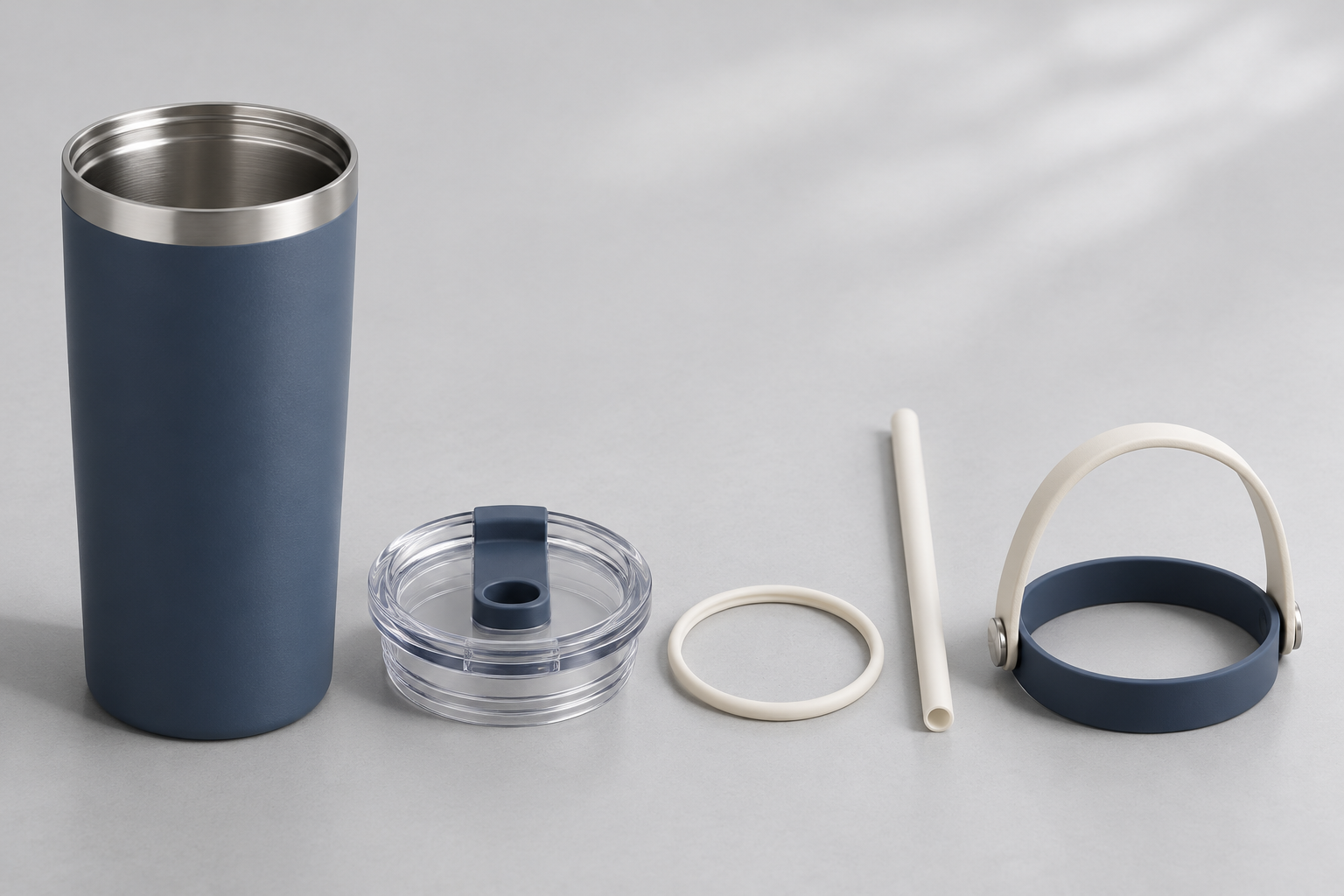
Develop the feature your customer needs.
If a different drinking opening is the reason someone will choose your product, focus the development review there. A change to the lid can also affect the seal, thread, straw and the way the product is cleaned. Judging the complete assembly helps reveal those effects before the new part is approved.
A new outer profile may involve metal-forming tools as well as molded components. The tooling quotation should identify the actual parts and processes involved. “One custom bottle” is not a sufficiently detailed tooling scope.
What are you paying to develop?
A tooling price is easier to judge when you can see the deliverables behind it. Separate the one-time development investment from the price of the goods you plan to buy.
| Cost or deliverable | What your quotation should make clear |
|---|---|
| Design and engineering | The drawings or models included, their revision and the review work covered. |
| Prototype samples | The sample purpose, materials or process limitations, quantity and revision allowance. |
| Molds and other production tooling | The named components, tooling scope, assumptions and separately priced fixtures or additional work. |
| Tool trials and samples | The trial work included, samples supplied and checks needed before acceptance. |
| Changes after review | How a requested change is assessed and approved, including any additional charge or schedule effect. |
| Production order | The product unit price, order quantities, decoration, packing and other separately quoted work. |
Does the investment suit your order plan?
Compare the development cost with the quantity you expect to buy and the reason the new feature matters. A modest first order and an untested design need a different commercial discussion from an established range with repeat demand.
Compare equivalent scopes
A lower tooling price may include fewer samples, fewer revision rounds or a different deliverable. Check what each offer includes before judging the price difference.
Know what each approval settles.
A sketch, a prototype and a trial sample answer different questions. You should know what you are accepting at each stage and what remains to be checked.
01
Agree the design
The drawing revision should identify the dimensions, interfaces and intended operation that matter. Open questions need to remain visible before tool manufacture is authorized.
02
Review the prototype
Use the prototype to assess the questions it was made to answer. A temporary material or printing process may help you judge shape without proving production performance.
03
Review the tool-trial sample
Check the sample made from the production tooling against the agreed design and review criteria. Record fit, appearance or functional changes against the correct revision.
04
Approve the production basis
Keep the accepted sample, final drawings and agreed checks together. Tool acceptance and permission to begin a production order should be clear decisions.
What happens to the mold after you pay?
Payment alone does not describe every right or responsibility. Before committing, establish how the tool will be used, stored and supported throughout your supply relationship.
| Your question | What to confirm in the project agreement |
|---|---|
| Who owns it? | The identified tools, the ownership arrangement and any conditions attached to it. |
| Can it be used for other customers? | The permitted use of the tool and any agreed exclusivity for the product or design. |
| Where is it kept? | The storage location, identification, access and any storage charges or conditions. |
| Who maintains or replaces it? | The maintenance responsibilities, repair approval process and basis for replacement charges. |
| What if I change manufacturing partners? | Whether transfer is permitted, the release conditions and the scope of files or equipment included. |
| What if the project stops? | The treatment of completed work, tools, files and outstanding charges at that stage. |
These are points to settle for your project, rather than universal promises about ownership, exclusivity or free maintenance.
Will tooling fit your launch date?
Count the decisions as well as the production days
Your plan may include design review, prototype revisions, tool manufacture, trials, sample approval and production. A quote for tool manufacture alone does not describe the full time until goods arrive.
See the effect of a later change
A revised thread, opening or dimension can affect tools, samples and compatible parts. Agree the cost and timing of a change before accepting the revised plan.
For a time-sensitive launch, compare the new-tooling route with a suitable existing model. The right choice depends on whether the original feature is essential to the product you want to sell.
Separate the tooling decision from ordinary branding
New tooling is relevant when the required shape, component or interface cannot be achieved with an accepted existing arrangement. Before committing, identify the part, design maturity, prototype purpose and the commercial and approval responsibilities. A logo, color or gift box does not automatically require new product molds.
| Tooling question | Decision to document | What remains to review |
|---|---|---|
| Which part changes? | Body, lid, handle, insert, closure or another identified component. | Affected interfaces, materials and assembly. |
| Is the design ready? | Current drawings, dimensions and open design choices. | Provisional features and the next prototype scope. |
| What does the charge cover? | Actual tooling work and expressly agreed deliverables. | Other development, samples, testing or changes outside that scope. |
| How is the result accepted? | Part and assembly requirements and the relevant trial or sample record. | Fit, function, appearance and downstream packing. |
| What are the rights and ongoing arrangements? | Expressly agreed ownership, access, use, maintenance and change terms. | Applicable commercial documents and responsible review. |
Prototype approval and tooling acceptance answer different questions
A visual prototype may support shape and layout discussion without proving production material, sealing or durability. A tooling trial can reveal part or assembly issues that were not visible in a mock-up.
Record the purpose of each sample and the actual acceptance. Do not treat a successful visual review as an automatic release for every production or functional requirement.
Example: a new lid on an existing bottle
The buyer wants a different drinking mechanism while retaining the bottle body. Define the neck and seal interface, operating requirement and included parts. Review whether an existing compatible assembly can meet the brief before assigning new tooling. If a new component is developed, keep its approval and commercial terms separate from the body and logo order.
Specific questions about this decision
Does paying for a mold automatically establish exclusivity?
Do not assume it. Ownership, use, access and exclusivity require explicit agreement for the actual scope.
Can a changed handle affect packing?
Yes. Review the complete assembled dimensions, protection and pack fit rather than only the new component.
Continue with the next decision
Questions before investing in tooling
Do I need CAD files to start?
A sketch, reference sample or image can begin the discussion. Before tool manufacture, the project needs an agreed technical definition. Confirm who prepares the drawings and what is included in that work.
Does a new color require a new mold?
A color change by itself usually does not change the product geometry. The selected material, surface process, quantity and setup requirements still need to be reviewed. A molded logo or structural change is a separate question.
Can I make a custom lid for an existing bottle?
Possibly, but appearance alone does not establish compatibility. The closure geometry, seal, dimensions and intended operation need to be reviewed together, followed by the appropriate sample checks.
How much does a mold cost?
The cost depends on the actual parts, geometry, materials, tool construction and included development work. A useful offer names the deliverables and separates tooling from samples, later changes and production goods.
Can tooling fees be credited against future orders?
Any credit or amortization arrangement needs to be agreed for the project, including the qualifying quantities and conditions. It should not be assumed from the initial tooling price.
Will the mold belong to my company?
Ownership and permitted use need to be stated for the identified tools in your project agreement. Storage, maintenance and transfer arrangements should be addressed separately.
Model references for this enquiry
Compare existing formats with the proposed body before defining the separate development scope.
- LT Vacuum Water Bottles (350 ml, 550 ml, 750 ml).
- BB Handled Straw Tumblers (30 oz, 40 oz).
- MK Insulated Handle Mugs (14 oz, 16 oz, 25 oz, 32 oz).
Is a new mold the right route for your product?
A sketch, sample or reference image can help explain what you want to change. Your expected order quantity and launch date help put the tooling decision in context.