
DRINKWARE FOR BUSINESS BUYERS
Find the route that fits your order.
Brand an existing model, develop an original product or plan a wholesale, online or gifting programme. Start with the buying decision you need to make.
Brands · importers · retail · business programmes
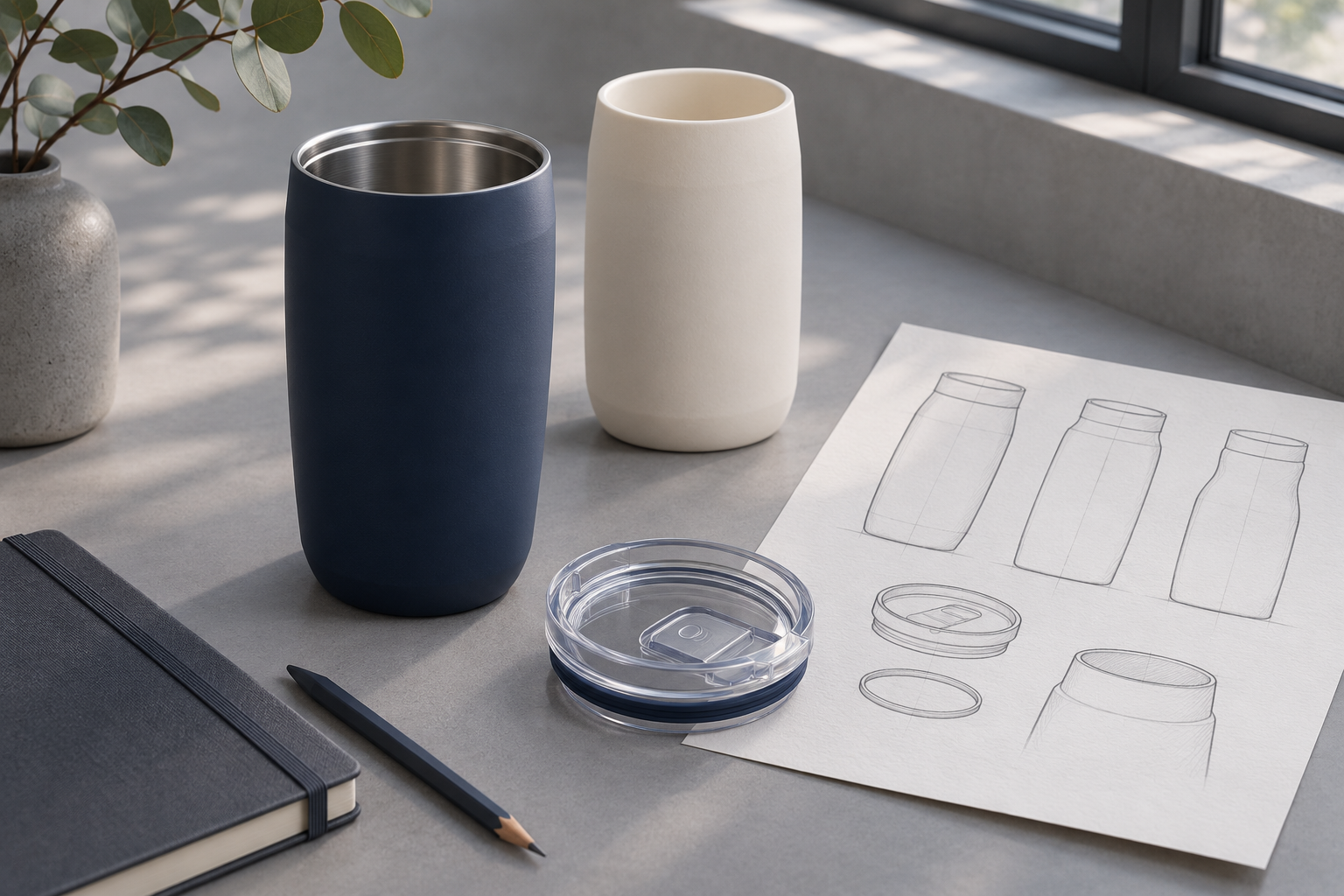
Updated 21 November 2026
What do you need this order to achieve?
A first collection, a wholesale assortment and a fixed-date gift programme have different questions to settle. Choose the route that describes your purchase, then review the supporting sample, quality and packing work for the actual product.
Decorating after you buy?
A blank for your printing business and a finished item carrying your brand need different quotations. Identify the intended supply state, surface or coating, included parts and packing. This makes wholesale personalization a clear choice alongside a finished private-label order.
Choose by the job you need to complete.
Build a private-label collection
Start from a suitable existing format. Review your colors, logo, accessories and completed presentation without assuming a new product mold is needed.
Develop an original product
Work through the feature that needs to change, the design deliverables and the samples needed to judge it. Review the tooling investment separately.
Source for wholesale distribution
Compare models, variant quantities, blank or decorated supply, packing and shipment assumptions. Make the assortment visible in the quotation.
Launch or replenish an online range
Review the first variant split, product information, completed unit pack and the current receiving requirements for your warehouse.
Buy for gifts, teams or campaigns
Connect the recipient, budget, artwork approvals and packing to the required arrival date. Include each client, sponsor or location version.
Extend a retail or brand collection
Give every capacity and color a role. Keep the physical finish, product information and packaging consistent with the collection you intend to sell.
Compare the decision, not just the label.
Terms such as OEM and ODM are used differently by suppliers. The practical difference is what already exists, what must change and what your team needs to approve.
| Buying decision | What to consider |
|---|---|
| An existing model already suits the buyer | Confirm the configuration, decoration, quantity split and pack, then judge the finished sample. |
| The shape or function needs to change | Define the new feature and assess drawings, prototypes, compatible parts and tooling. |
| The product is chosen; the programme is complex | Make artwork versions, locations, pack contents, receiving requirements and approval responsibilities explicit. |
| A previous item needs replenishment | Begin with the accepted item code and files. Review changes and current availability, pricing and timing before release. |
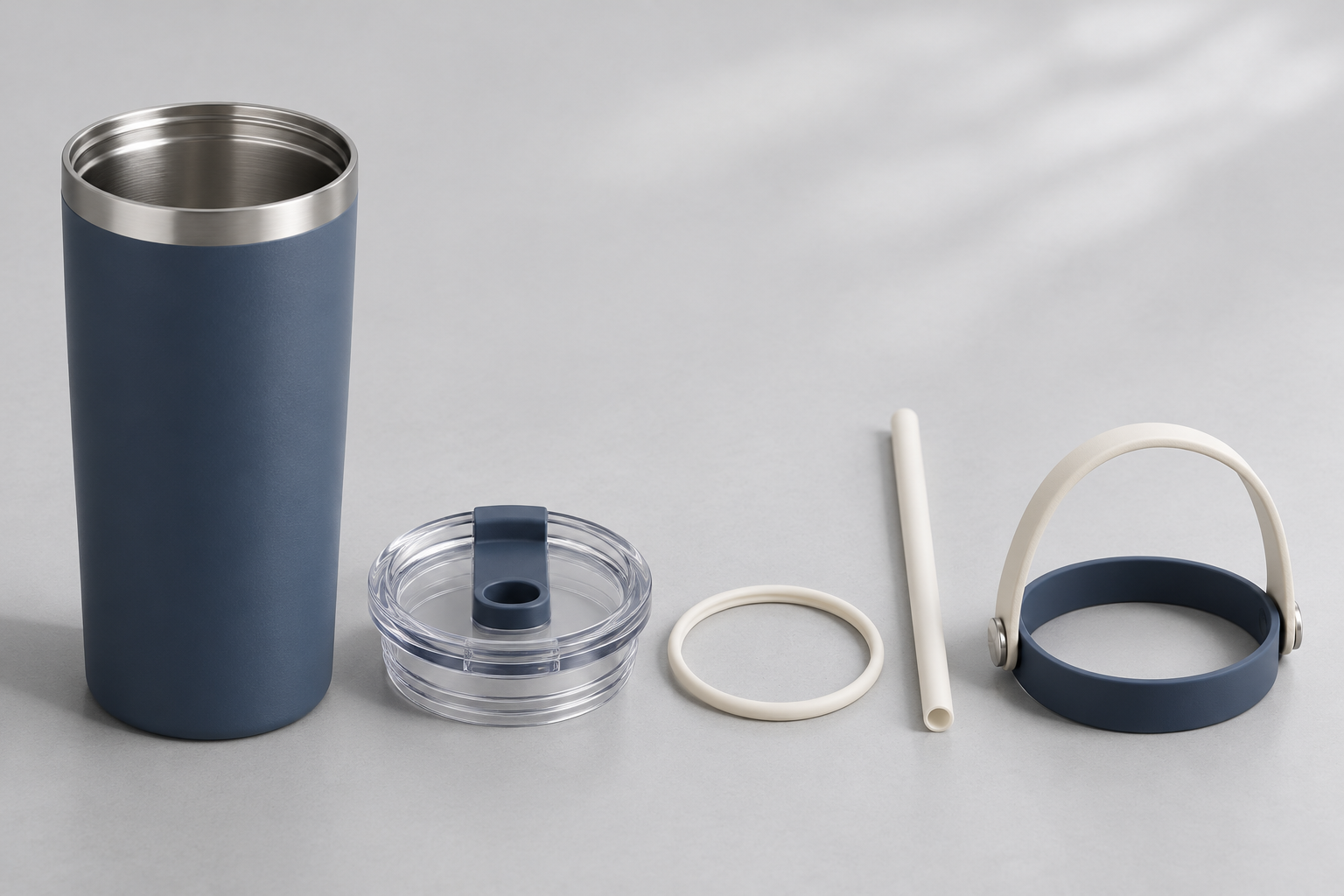
Keep product development and tooling separate.
A development project may use existing parts, modified tools or new molds. A logo or color project normally raises a different set of decisions from a new lid or body profile.
The dedicated tooling page explains the scope behind the investment, trial samples, acceptance and the ownership and maintenance questions to settle for the project.
Continue with the details you need.
Supporting work belongs to the route you choose.
These pages help you examine the complete order. The scope and supporting evidence need to apply to the exact item being purchased.
Branding and finish
See how colors, artwork and surfaces are reviewed on the actual configuration.
Quality and acceptance
Understand the reference, criteria and records used to judge the order.
Packing and shipment
Connect presentation and protection with the next handling and receiving step.
Market documentation
Review which product reports and supporting records are relevant to the item and destination.
Commercial scope
Compare quantity assumptions, separate charges and the stages in the schedule.
Repeat-order planning
Keep the accepted assembly, files and changes traceable for the next purchase.
Planning supply across several orders or locations?
An established reference
Keep the item code, accepted sample, artwork and packing files together so each location or reorder starts from a known version.
A visible change
Identify a changed lid, finish, quantity or instruction file before the next order. Review how it affects compatibility, information and previous accessory stock.
A project-specific arrangement
Stock holding, spare parts, scheduled releases and delivery to multiple locations need their own confirmed scope. The programme should describe what is actually included.
Find a programme for each drinkware family
Start with the product family, then use the industry route to plan the real purchasing and receiving situation. These are procurement solution guides; final product models and order specifications are confirmed separately.
Water Bottle Sourcing Solutions
Compare private-label, sports, kids, shaker, foldable and functional bottle programmes by recipient, use, customization and sample approval.
Tumbler Sourcing Solutions
Compare stainless, handled, plastic, kids, stacking and press tumblers for retail, coffee, gifting and business merchandise programmes.
Coffee & Specialty Mug Sourcing Solutions
Plan branded coffee mugs, travel mugs, large handled formats and mate gourd programmes for cafés, retail, workplace and gifting buyers.
Barware & Beverage Programme Solutions
Compare wine, champagne, beer, cocktail, shot, can-cooler, chiller and shaker programmes by serving, container fit, branding and pack-out.
Sublimation & Functional Drinkware Solutions
Separate blank supply, finished full-color orders and speaker-tumbler programmes with coating qualification, decoration boundaries and module acceptance.
Questions for your buying team
Can I start without every specification?
A photo, sketch or sample can begin the discussion. Explain the intended buyer, the features that matter, the proposed quantities and the decisions that remain open.
Is sampling a separate buying route?
Sampling supports several routes. An existing model, decorated sample and development prototype answer different questions; the required sample should follow the decision your team needs to make.
Does an OEM or ODM label tell me who owns the design?
No label replaces a defined project scope. The identified designs, tooling, permitted use and commercial responsibilities should be stated for the actual work.
Can one order serve several channels?
Identify each channel’s quantity, product-information, unit-pack and receiving requirements. The configuration and quotation should make any differences visible.
Explore the complete buying programmes
Blank supply and downstream decoration
Separate blank supply from finished decoration. Compare the surface, included components, samples and packing for the work your business will perform.
Sourcing guides by drinkware format
Choose a format to compare selection requirements, quotation details and sample checks.
Water bottles · 11 guides
- Stainless Steel Bottle Sourcing
- Custom Sports Bottle Sourcing
- Single-Wall Bottle Sourcing
- Custom Plastic Bottle Sourcing
- Motivational Bottle Sourcing
- Tritan Bottle Sourcing
- Collapsible Bottle Sourcing
- Custom Shaker Bottle Sourcing
- Kids Water Bottle Sourcing
- Phone-Holder Bottle Sourcing
- Yerba Mate Bottle Sourcing
Tumblers · 9 guides
Coffee & specialty mugs · 4 guides
Barware · 11 guides
- Custom Wine Tumbler Sourcing
- Custom Champagne Flute Sourcing
- Custom Beer Mug Sourcing
- Cocktail Cup Sourcing
- Custom Shot Cup Sourcing
- Insulated Wine Bottle Sourcing
- Wine Tumbler Gift Set Sourcing
- Wine Chiller Sourcing
- Custom Ice Bucket Sourcing
- Custom Can Cooler Sourcing
- Custom Cocktail Shaker Sourcing
Sublimation & functional drinkware · 3 guides
Start with a listed product reference
Use the model reference when requesting the matching sample, specification, artwork and packing review.
- LT Vacuum Water Bottles (350 ml, 550 ml, 750 ml).
- BB Handled Straw Tumblers (30 oz, 40 oz).
- MK Insulated Handle Mugs (14 oz, 16 oz, 25 oz, 32 oz).
Start with the outcome you are buying for.
Tell us whether you are building a range, sourcing stock, developing a new product or planning a business programme. A reference and quantity plan will help focus the discussion.