
WALL THICKNESS, CAPS & LEAK CHECKS
Single-Wall Bottle Sourcing
For single-wall stainless steel bottle orders, make the non-insulated construction clear at the start. Compare the usable capacity, closure, carrying routine and decorated packing unit against that brief.
Availability check: this single-wall bottle guide does not identify a matching catalogue model. Send a product reference to confirm supply and any development needed before quotation.
For business orders, branded ranges and procurement teams.
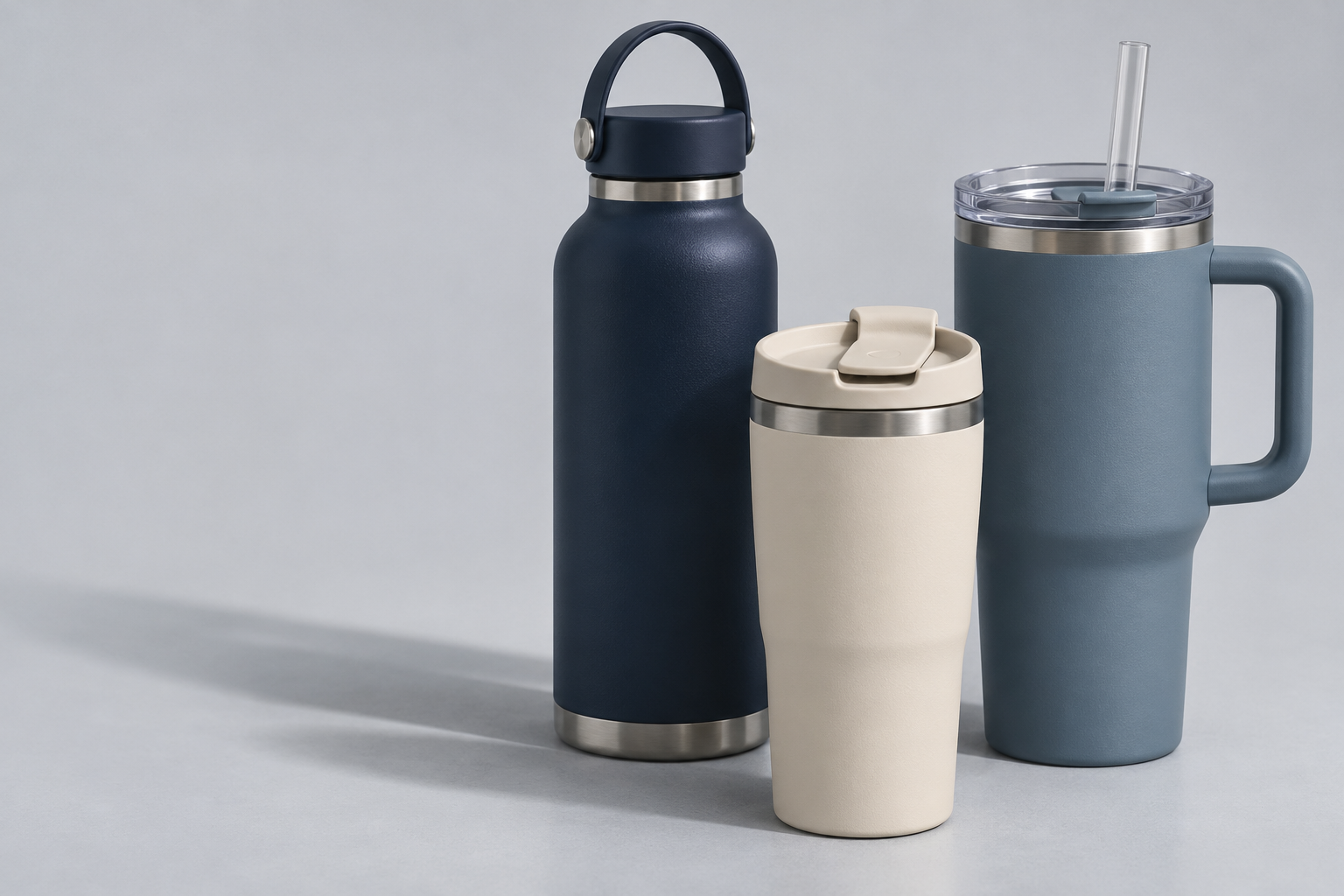
Choose the format around the buying task
Single-wall bottles should be compared as non-insulated hydration products. Their appeal may be a simpler construction, lower empty weight or a particular merchandising brief; the buyer still needs the actual dimensions, material and closure rather than assuming that every metal bottle is vacuum insulated.
| Decision | What to compare | What belongs in the order |
|---|---|---|
| Use conditions | Compare the intended cold-water routine with any hot-drink brief. | Keep the accepted temperature and care information with the item. |
| Position in the range | Show the non-insulated bottle separately from vacuum products. | Use distinct item codes, labels and product descriptions. |
| Plain or decorated | Compare the same bottle, cap and packing before adding artwork. | Separate decoration work from the underlying bottle price. |
Keep thermal expectations explicit. Surface temperature, condensation and intended drink conditions need review for the chosen construction. A price comparison against a vacuum bottle is meaningful only when the different use and performance are visible.
How business buyers use this format
Use these buying examples to identify the details your own order needs. They describe procurement situations, rather than completed customer projects.
Promotional agency
A campaign compares two budget routes
The client needs a metal bottle within an approved campaign budget.
Order brief. Compare single-wall and insulated alternatives on the same artwork and packing basis.
Before approval. Approve the chosen construction and the description used in the client proposal.
Keep in view. Do not present a lower-priced single-wall option with insulation claims.
Sports club buyer
A club wants a simple refill bottle
A programme needs reusable bottles for routine cold-water hydration.
Order brief. Specify filled weight, carrying arrangement and the stated drink conditions.
Before approval. Review the closure and handling during the intended refill routine.
Keep in view. Actual user suitability needs review; metal construction alone is not a safety finding.
Retail category manager
A retailer creates a clearly priced basic line
The range needs an entry-level option beside vacuum bottles.
Order brief. Use distinct shelf language, item codes and product information so customers can compare the constructions.
Before approval. Check that product photos, labels and sales descriptions match the non-insulated version.
Keep in view. A similar silhouette can cause incorrect listings or picking errors.
Drinkware distributor
A wholesaler consolidates an unbranded order
Several trade customers need a plain refill bottle for later branding.
Order brief. Keep the finish, neck and cap reference fixed and quote the variant split and carton contents.
Before approval. Inspect receiving condition and identification before any downstream decoration.
Keep in view. Later printing or coating work requires a separate process review.
Send a brief that can be quoted
Include the configuration, decoration and delivery unit together. Where an option is undecided, ask for it as a separate comparison so the quotations cover the same contents.
- Single-wall construction and material description
- Cap and carrying components
- Intended drink and care conditions
- Plain or decorated quantities and pack
Also provide the destination and required arrival date. Ask the quotation to distinguish samples, decoration, packing and freight where applicable; minimum quantities and timing depend on the selected item and order.
What to settle before approving the order
Confirm the selected assembly
Describe the construction as single wall where applicable.
Check the finished presentation
Confirm closure and carrying components on the actual sample.
Keep the accepted reference
Align care and temperature instructions with the identified item.
Keep the approved artwork revision, component list, packing and any agreed checks with the purchase specification. If a later order changes a body, lid, finish or accessory, identify that change before treating it as the same item.
Questions before you request a quote
How should single-wall and insulated quotations be compared?
Compare them as different constructions. Use the same quantity, artwork and packing assumptions, then make the difference in intended use and thermal expectations explicit. A similar shape is not a reason to reuse an insulated product description.
What if the shape or component is not available as an existing format?
Describe the required change and its purpose. A logo or finish option is a different scope from a new body, lid or component. For a geometry change, discuss design, fit review, prototypes and tooling separately from the decorated-item quotation.
Confirm the model for your enquiry
Review the current catalogue for listed models. If you need a format outside that range, include a reference in the enquiry so item availability and any development scope can be confirmed.
Plan the finished order
Send your preferred format, quantity, artwork, packing needs and destination. Include the conditions that matter to the recipient so the proposed item can be reviewed against your brief.